

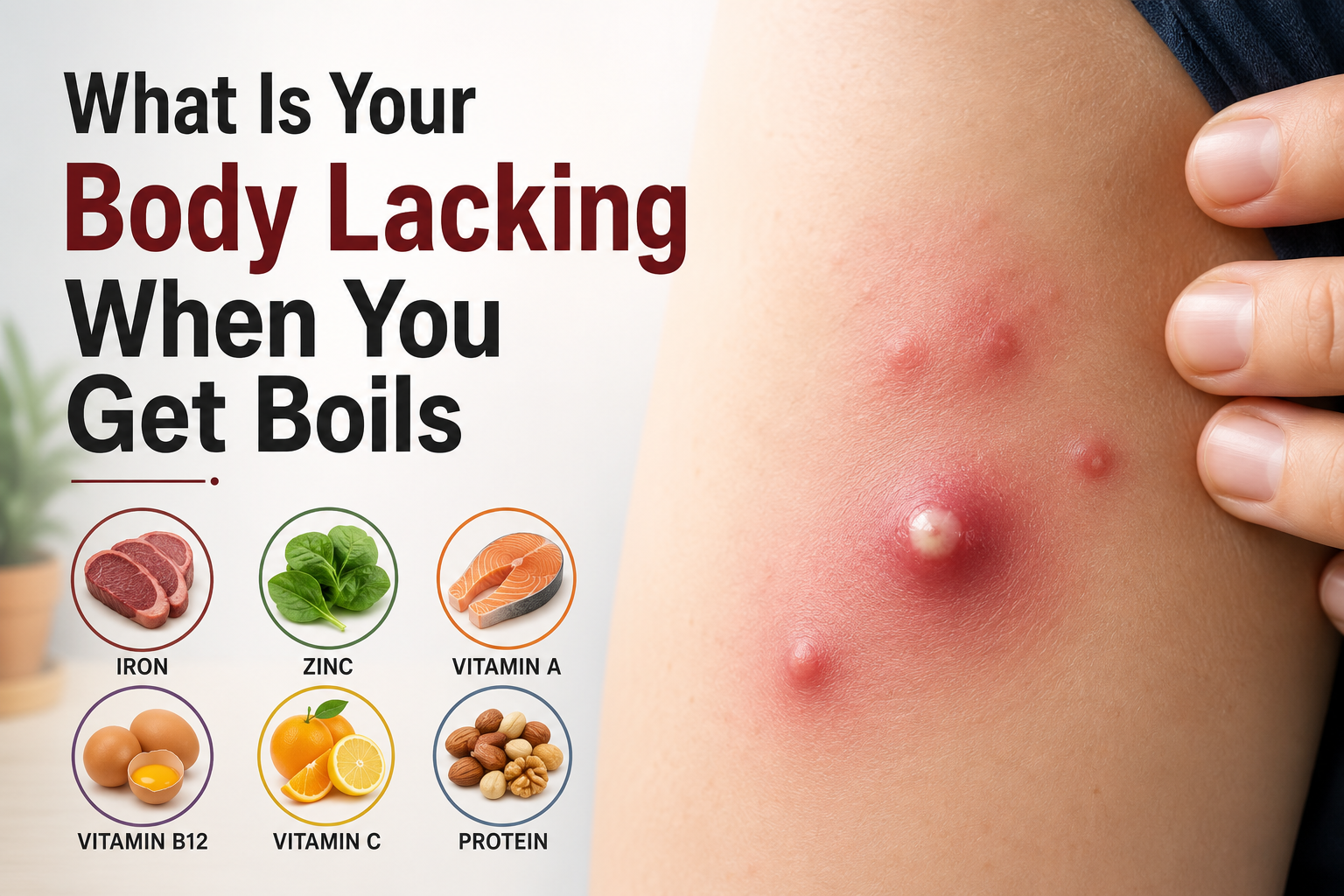
The honest starting point for what is your body lacking when you get boils is that a boil itself is caused by bacteria, almost always Staphylococcus aureus, infecting a hair follicle, not directly by a missing nutrient. But that’s not the whole story: certain deficiencies weaken the immune defenses that would normally keep that same bacteria in check, which is why nutrition is a genuinely relevant piece of the puzzle, especially if boils keep coming back.
Here’s which nutrients actually matter for this, what else raises your risk independent of diet, and how to tell a garden-variety boil from one that needs more than a warm compress.
Nutrients Linked to Increased Boil Susceptibility
| Nutrient | Its Role | Good Sources |
| Zinc | Supports neutrophil function, the immune cells that directly fight bacterial infection | Oysters, beef, pumpkin seeds, chickpeas |
| Vitamin A | Maintains skin barrier integrity, a compromised barrier lets bacteria in more easily | Sweet potatoes, carrots, spinach |
| Vitamin C | Supports collagen production and wound healing, plus general immune cell function | Citrus fruits, bell peppers, strawberries |
| Vitamin D | Involved in activating immune cells like macrophages and T cells | Fatty fish, fortified milk, sunlight exposure |
| Iron | Needed for immune cell production; deficiency anemia is linked to higher infection susceptibility | Red meat, lentils, spinach, fortified cereals |
| Protein (overall) | Provides the building blocks for antibodies and immune cells generally | Meat, fish, eggs, legumes, dairy |
None of these deficiencies single-handedly “cause” a boil the way the bacteria itself does. Think of them as factors that can tip the odds, making infection more likely or recovery slower, rather than a direct trigger on their own.
Risk Factors That Have Nothing to Do With Diet
- Close contact with someone who has a staph infection or active boil
- Diabetes, which impairs the body’s general ability to fight bacterial infection
- Obesity, associated with higher risk through several overlapping factors
- Existing skin conditions like eczema or acne, which damage the skin’s protective barrier
- A weakened immune system from any cause, illness, medication, or otherwise
- Friction and sweat in areas like the armpits, groin, and thighs, which create favorable conditions for bacteria
Diet is one lever among several here, and for many people, it’s not even the most significant one.
One Boil vs Boils That Keep Coming Back
| A Single, Occasional Boil | Recurring or Multiple Boils |
| Often just bad luck: a scrape, ingrown hair, or brief bacterial exposure | More likely reflects an underlying, ongoing susceptibility factor |
| Usually resolves with basic home care | Worth investigating diabetes, immune function, or nutritional status |
| Doesn’t necessarily need medical workup | A doctor may check blood sugar, do a wound culture, or review your diet and health history |
| Low likelihood of a deeper systemic cause | Sometimes linked to undiagnosed diabetes or a nutrient deficiency |
What Helps a Boil Heal, and What Definitely Doesn’t
- Apply a warm compress for 10 to 15 minutes, several times a day, to encourage it to come to a head and drain naturally.
- Keep the area clean and covered once it starts draining, to avoid spreading bacteria to other areas or people.
- Wash your hands thoroughly after touching the area or changing a dressing.
- Never squeeze or attempt to pop a boil yourself, this can push the infection deeper or spread it to surrounding skin.
- Avoid sharing towels, razors, or clothing while a boil is active, since the bacteria involved is contagious.
- See a doctor if it doesn’t improve within about a week, grows larger than roughly an inch, or you develop a fever.
When a Boil Needs More Than Home Care
- Fever or feeling generally unwell alongside the boil
- A boil larger than about 2 centimeters, or one that keeps growing
- Redness spreading outward from the boil, or red streaking
- A boil on the face, spine, or near the eyes, areas where complications are more concerning
- Multiple boils clustered together (a carbuncle), which represents a deeper, more serious infection
- Recurring boils, three or more in six months, which warrants a broader medical evaluation
The Factor That Doesn’t Show Up on a Nutrition Label
Diet gets most of the attention in this conversation, but chronic stress is a quieter contributor worth naming. Sustained stress raises cortisol, and prolonged elevated cortisol measurably suppresses immune function, including the neutrophil activity that normally keeps staph bacteria in check on the skin. It’s not the primary driver for most people, diabetes, hygiene, and nutrition status generally matter more, but for someone dealing with recurring boils who has already ruled out the more common culprits, ongoing stress is a reasonable next thing to look at.
If chronic stress feels like a significant, ongoing presence in your life rather than an occasional rough patch, and you’re also dealing with recurring skin or immune issues, that’s worth addressing directly. Conway Behavioral Health treats stress and anxiety-related conditions, and managing the stress side of the equation can be a meaningful piece of the picture alongside whatever your doctor is addressing medically.
A Couple of Things Worth Correcting
A single boil doesn’t necessarily mean you have a nutrient deficiency. Most one-off boils are simply the result of bacteria finding an opportunity, a small cut, an ingrown hair, nothing more systemic than that.
Taking a multivitamin isn’t a reliable fix for recurring boils if the actual issue is undiagnosed diabetes, an immune condition, or a specific, more significant deficiency that a general supplement won’t adequately correct.
Popping or draining a boil yourself at home is not a shortcut, it’s one of the more common ways a simple boil turns into a spreading, more serious infection.
Bottom Line
Boils are primarily a bacterial infection, not a direct symptom of one missing nutrient, but deficiencies in zinc, vitamin A, vitamin C, vitamin D, iron, or protein can weaken the immune defenses that normally keep that bacteria contained, making infection more likely or recovery slower. A single boil is usually just bad luck; boils that keep recurring are worth a real conversation with a doctor about diabetes, immune function, nutrition, and, in some cases, chronic stress, rather than something to manage indefinitely with home remedies alone.
Common Questions About Boils and Deficiencies
Does zinc deficiency directly cause boils?
Not directly, but low zinc impairs the immune cells responsible for fighting bacterial infections, which can make boils more likely or slower to heal.
Can taking vitamins prevent boils?
If an actual deficiency is present, correcting it may help reduce susceptibility, but vitamins won’t prevent boils caused by other factors like diabetes or poor hygiene.
Is it normal to get boils occasionally with no clear cause?
Yes, an occasional single boil is common and doesn’t necessarily indicate an underlying deficiency or health condition.
What blood tests might a doctor order for recurring boils?
Blood sugar testing for diabetes, a wound culture to identify the bacteria, and sometimes nutrient levels are common starting points.
Can diabetes cause boils even with a good diet?
Yes, diabetes impairs immune function and wound healing independent of nutrient intake, which is why it’s checked separately from diet.
Should I pop a boil to make it heal faster?
No, this can push the infection deeper or spread bacteria to surrounding skin, potentially making things worse rather than better.
How many boils in a year counts as “recurring”?
Three or more within about six months is generally considered a pattern worth a more thorough medical evaluation.
Can stress alone cause boils?
Not on its own for most people, but chronic stress can suppress immune function enough to be a contributing factor, particularly alongside other risk factors.