

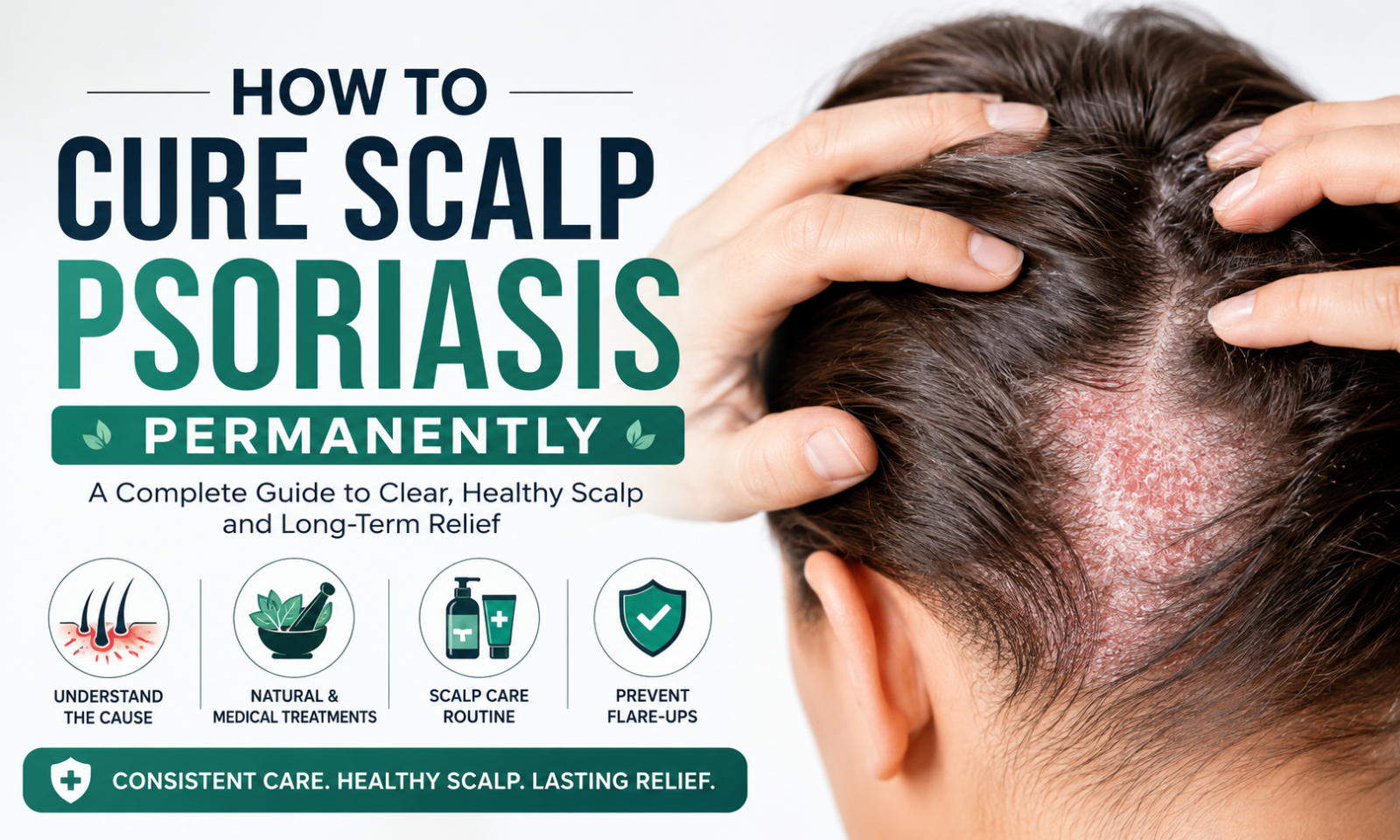
A practical, evidence-based guide for reducing flakes, itching, plaques, and recurring scalp flares
Scalp psoriasis can cause thick scale, intense itching, soreness, visible flakes, and temporary hair shedding. Because the condition often improves and then returns, many people search for a treatment that will eliminate it once and for all. The most useful starting point is understanding that psoriasis is a chronic immune-mediated disease, not an infection, a hygiene problem, or ordinary dandruff.
People searching for how to cure scalp psoriasis permanently deserve a direct answer: there is currently no permanent cure. However, the right combination of prescription treatment, gentle scale removal, trigger control, and maintenance care can produce long periods of clear or nearly clear skin. The realistic goal is durable control and fewer flares, not a one-time remedy that promises the condition will never return.
| Key Takeaways
· Scalp psoriasis is chronic. Symptoms may disappear for months or years, but the condition can return. · Topical corticosteroids are often the fastest first-line prescription option for reducing inflammation, itching, and scale. · Salicylic acid and medicated shampoos can loosen scale, but thick or widespread disease may require phototherapy, oral medication, or biologic treatment. · Scratching, picking, harsh chemicals, and forceful scale removal can worsen inflammation and contribute to temporary hair loss. · A dermatologist should evaluate persistent symptoms, unexplained hair loss, signs of infection, or joint pain and stiffness. |
Can Scalp Psoriasis Be Cured Permanently?
No current treatment removes the underlying tendency to develop psoriasis permanently. The immune system and genetic factors that contribute to the disease remain present even when the scalp looks completely clear. This is why clinicians usually talk about remission, clearance, control, and maintenance rather than a cure.
That distinction does not mean treatment is ineffective. Many people reach complete or near-complete clearance, especially when the diagnosis is correct and therapy is matched to the thickness of the plaques, the amount of scalp involved, hair type, previous treatment response, and whether psoriasis affects other parts of the body.
| Term | What It Means | What to Expect |
| Cure | The disease is permanently eliminated. | Not currently available for psoriasis. |
| Clearance | Visible plaques and scale are absent or nearly absent. | Possible with effective treatment, but maintenance may be needed. |
| Remission | Symptoms remain minimal or absent for a period of time. | Can last weeks, months, or longer and may end with a new flare. |
| Control | Symptoms are reduced enough that they no longer dominate daily life. | A realistic long-term goal for most people. |
| Maintenance | Lower-intensity treatment helps prevent rapid recurrence. | Often used after a flare has improved. |
Why Scalp Psoriasis Keeps Coming Back
Psoriasis develops when an overactive immune response accelerates skin-cell growth. Instead of shedding normally, cells collect on the surface and form inflamed plaques. On the scalp, hair can trap scale and make medicine harder to apply directly to the skin. This combination can make the condition seem unusually stubborn.
The National Psoriasis Foundation overview of scalp psoriasis explains that symptoms may range from fine dandruff-like scaling to thick crusted plaques. Common triggers include stress, infections, skin injury, smoking, alcohol, some medications, and weather changes. A personal flare pattern may be more useful than following a generic list of foods or products to avoid.
A Step-by-Step Treatment Plan That Can Produce Lasting Control
1. Confirm That It Is Psoriasis
Scalp psoriasis can resemble seborrheic dermatitis, eczema, allergic contact dermatitis, ringworm, and product buildup. Psoriasis usually creates sharply defined plaques with dry, silvery or powdery scale, while seborrheic dermatitis often looks greasier and more yellow. Some people have features of both conditions, sometimes called sebopsoriasis.
A dermatologist can often diagnose scalp psoriasis by examining the scalp, hairline, ears, nails, elbows, knees, and other common sites. A skin biopsy is occasionally used when the appearance is unclear. Correct diagnosis matters because antifungal shampoo alone will not control an immune-driven psoriasis flare.
2. Loosen Thick Scale Before Applying Medicine
Medication cannot work well if it sits on top of a dense layer of scale. A scale-softening product containing salicylic acid may help lift buildup so prescription medicine can reach the skin. Mineral oil or another dermatologist-approved softening method may also be recommended for some hair types.
Apply products only as directed, and avoid scraping the scalp with fingernails, fine-tooth combs, or sharp tools. Forceful removal can cause bleeding, increase inflammation, trigger new plaques at injured areas, and pull out hairs that are trapped in scale.
3. Use Medicated Shampoo Correctly
Over-the-counter shampoos containing salicylic acid or coal tar may help mild scalp psoriasis. Salicylic acid loosens scale. Coal tar can slow excessive skin-cell growth and reduce itching and inflammation. These products work best when they reach the scalp rather than only coating the hair.
Follow the label or clinician instructions for contact time and frequency. Using a strong medicated shampoo too often can dry the scalp and hair, so many people alternate it with a fragrance-free gentle shampoo and use conditioner on the hair lengths. Stop and ask a clinician for advice if a product causes burning, swelling, blistering, or a major increase in irritation.
4. Use Prescription Topicals for Active Flares
The American Academy of Dermatology treatment guidance identifies topical corticosteroids as the most commonly prescribed treatment for scalp psoriasis. Steroid solutions, foams, sprays, oils, or shampoos can reduce redness, swelling, itching, and scale. A clinician may also prescribe a vitamin D analog, a steroid and vitamin D combination, or a nonsteroidal treatment such as roflumilast foam, depending on age, severity, and treatment history.
Strong steroids should not be used continuously or in larger amounts than prescribed. Long-term misuse can thin the skin and cause other side effects. A common strategy is to use a stronger medicine briefly to calm a flare and then move to a lower-frequency maintenance plan.
5. Consider Phototherapy or Systemic Treatment for Stubborn Disease
If topicals cannot control the scalp, a dermatologist may recommend targeted ultraviolet treatment, an excimer laser, oral medication, or a biologic drug. Systemic therapy may be appropriate even when the total affected skin area is small because the scalp is a high-impact location that can interfere with sleep, work, hair care, and emotional well-being.
The best systemic choice depends on other health conditions, pregnancy plans, infection risk, insurance coverage, laboratory monitoring, and whether psoriatic arthritis is present. These treatments require clinician supervision and should never be purchased from unverified online sellers.
A Practical Scalp-Care Routine
| Routine Step | What to Do | What to Avoid |
| Before washing | Use a clinician-approved scale softener when plaques are thick. | Picking or scraping scale from a dry scalp. |
| During washing | Apply medicated shampoo to the scalp and allow the recommended contact time. | Aggressive rubbing with nails or a stiff brush. |
| After washing | Rinse thoroughly and condition the hair lengths to reduce dryness and breakage. | Heavy fragrance, harsh alcohol-based products, or very hot water. |
| Styling | Use low heat, gentle detangling, and loose hairstyles. | Tight braids, chemical relaxers during a flare, and repeated high heat. |
| Maintenance | Use the preventive schedule recommended by a dermatologist after clearing. | Stopping every treatment immediately when the scalp first looks better. |
How to Reduce Flares Between Treatments
Long-term control usually depends on both medical treatment and a realistic maintenance routine. Keep a simple record of flare dates, new medications, infections, weather changes, hair products, stress, sleep, smoking, and alcohol use. Patterns may become visible after several weeks or months.
- Protect the scalp from sunburn, cuts, scratching, and irritating chemical treatments.
- Treat infections promptly and tell the prescribing clinician if a medication appears to worsen psoriasis.
- Avoid smoking and limit alcohol, especially if either has repeatedly preceded flares.
- Use fragrance-free, gentle hair products and patch-test new dyes or styling products.
- Keep scheduled follow-ups even when the scalp improves so the maintenance plan can be adjusted safely.
Stress does not cause psoriasis by itself, but it can worsen inflammation, scratching, sleep loss, and inconsistent treatment habits. Learning about behavioral health habits such as sleep and stress responses can help people recognize when daily patterns are making physical symptoms harder to manage. Stress reduction supports medical care, but it does not replace psoriasis medication.
What About Diet, Supplements, and Natural Remedies?
No specific diet, vitamin, essential oil, detox, or home remedy has been proven to cure scalp psoriasis permanently. A balanced eating pattern, healthy weight, regular activity, and limited alcohol may support overall health and reduce conditions that often occur alongside psoriasis. However, dramatic elimination diets can create nutritional gaps without improving the scalp.
Tell the dermatologist about every supplement and topical home remedy you use. Tea tree oil, apple cider vinegar, essential oils, and concentrated herbal products may cause irritation or allergic contact dermatitis, particularly when applied to cracked skin. Natural does not automatically mean gentle or safe.
Does Scalp Psoriasis Cause Permanent Hair Loss?
Scalp psoriasis usually does not damage hair follicles permanently. Hair loss is more often temporary and related to inflammation, scratching, forceful scale removal, tight hairstyles, or harsh treatment. Hair generally grows back after the flare is controlled and the scalp is treated gently.
See a dermatologist if shedding is sudden, patchy, painful, associated with scarring, or continues after the psoriasis improves. Other causes such as alopecia areata, fungal infection, hormonal changes, nutritional deficiency, and medication effects may need separate evaluation.
When to See a Dermatologist
Schedule a medical evaluation when over-the-counter treatment has not improved symptoms after a reasonable trial, the diagnosis is uncertain, plaques cover much of the scalp, itching disrupts sleep, or the condition affects self-confidence and daily activities. Early care can reduce unnecessary irritation from repeatedly switching products.
| Seek Prompt Medical Care If You Notice
· Pus, warmth, spreading redness, fever, or increasing tenderness that may suggest infection. · Rapidly worsening redness or scaling over a large part of the body. · New joint pain, morning stiffness, swollen fingers or toes, or heel pain that could suggest psoriatic arthritis. · Severe hair loss, scarring, bleeding that will not stop, or a scalp lesion that looks unlike the other plaques. · A serious medication reaction, including facial swelling, trouble breathing, or widespread blistering. |
The Emotional Impact Matters Too
Visible flakes, itching, hair shedding, and fear of judgment can create embarrassment, avoidance, anxiety, or low mood. These reactions are not superficial. Scalp psoriasis is considered a high-impact form of the disease because a small affected area can still have a major effect on quality of life.
A dermatologist can address the skin disease, while support for anxiety and distress may be useful when appearance concerns, persistent worry, or disrupted sleep are interfering with work, relationships, or normal activities. Treating emotional strain alongside the scalp can make the overall plan easier to follow.
Frequently Asked Questions
What is the fastest way to calm scalp psoriasis?
Prescription topical corticosteroids often work quickly for an active flare, but the best formulation and duration depend on age, severity, and location. Thick scale may need to be softened first so the medicine can reach the skin.
Can scalp psoriasis go away for years?
Yes. Some people experience long remissions, especially with effective treatment and maintenance. A long symptom-free period is not the same as a permanent cure, because psoriasis can flare again after illness, stress, medication changes, skin injury, or no obvious trigger.
Should I wash my hair every day?
The right schedule depends on the product, hair texture, dryness, and treatment plan. Some prescription shampoos are used daily for a limited period, while other medicated products are used less often. Follow the label and dermatologist instructions rather than assuming more washing is always better.
Can coconut oil remove scalp psoriasis?
An oil may soften scale and reduce dryness for some people, but it does not treat the underlying immune inflammation. Oils can also worsen buildup or irritate sensitive skin. Ask a clinician how to use a scale softener safely and wash it out without aggressive scrubbing.
Is scalp psoriasis contagious?
No. Psoriasis cannot spread through touch, shared combs, towels, swimming pools, or close contact. It results from immune and genetic factors rather than a contagious organism.
Final Takeaway
There is no proven way to cure scalp psoriasis permanently, but modern treatment can provide strong and lasting control. The most effective plan usually combines correct diagnosis, gentle scale removal, prescription anti-inflammatory therapy, maintenance care, and treatment escalation when topicals are not enough. Avoid miracle-cure claims, do not scrape plaques, and work with a dermatologist if the condition is persistent, painful, widespread, or affecting your hair or emotional health.
| Medical Disclaimer
· This article is for general educational purposes and is not a diagnosis or a substitute for care from a dermatologist or other qualified healthcare professional. · Do not start, stop, or change prescription psoriasis treatment without medical guidance. Seek urgent care for severe reactions, widespread rapidly worsening symptoms, or signs of infection. |