

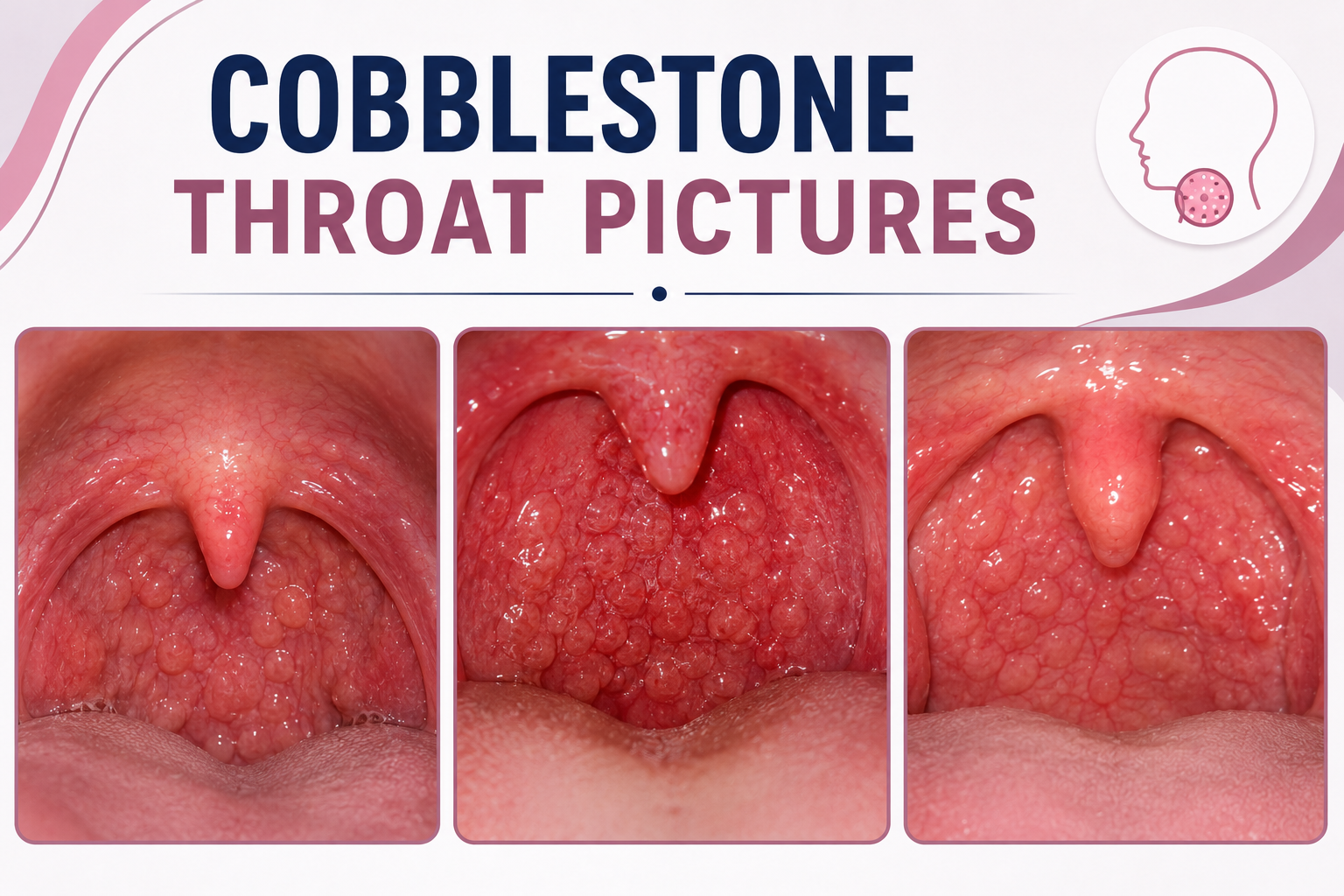
A visual identification guide to common causes, look-alike conditions, treatment, and warning signs
Small, rounded bumps across the back wall of the throat can look alarming when you notice them in a mirror or phone photo. The pattern often reflects enlarged immune tissue reacting to repeated irritation rather than a dangerous growth. Allergies, mucus drainage, viral infections, dry air, and reflux are among the most common triggers.
People searching for cobblestone throat pictures are usually trying to decide whether a bumpy throat matches a harmless inflammatory pattern or something that needs medical attention. A photo can help you describe the appearance, but it cannot confirm the cause. Color, location, symmetry, associated symptoms, and how long the changes have lasted all matter.
| Key Takeaways
· Cobblestone throat usually appears as many small, evenly distributed bumps on the back of the throat, often with a red or irritated background. · The bumps are typically enlarged lymphoid tissue responding to postnasal drip, allergies, infection, reflux, smoke, or dry air. · A single enlarging lump, an open sore, bleeding, severe swallowing trouble, breathing difficulty, or symptoms lasting several weeks should be evaluated. · Treatment targets the underlying trigger. The bumps usually flatten after the irritation improves. · Do not diagnose throat cancer, strep, reflux, or an allergy from a picture alone. |
What Does Cobblestone Throat Look Like?
Typical cobblestoning has a recognizable pattern. Instead of one isolated mass, the back of the throat shows multiple small elevations that resemble pebbles in a stone path. They may be pink, red, or close to the surrounding tissue color. The surface can look moist and shiny when mucus is present, and the throat may appear generally inflamed.
| Visual Feature | Typical Cobblestone Pattern | Why It Matters |
| Number of bumps | Many small bumps rather than one dominant lump | A uniform cluster is more consistent with reactive lymphoid tissue. |
| Location | Back wall of the throat, sometimes higher behind the nose | Location often points toward mucus drainage, allergy, or reflux irritation. |
| Color | Pink, red, or flesh-colored | Bright redness can accompany infection or significant irritation. |
| Shape | Rounded, slightly raised, and similar in size | Uneven, ulcerated, or rapidly changing lesions need closer evaluation. |
| Surface | Smooth or pebbled, sometimes coated with clear mucus | White patches, pus, bleeding, or open sores suggest a different process. |
| Pattern over time | Improves as the trigger settles | Persistence or progression despite treatment deserves a clinician’s exam. |
What Phone Pictures Can and Cannot Tell You
Phone cameras can exaggerate redness because of flash, automatic color correction, and close-up distortion. Saliva reflections may also look like white spots. A picture is most useful for tracking change over several days and showing a clinician what you saw, not for choosing antibiotics or deciding that a lesion is benign. Use the same lighting and distance if you take comparison photos, and avoid repeatedly touching the throat with fingers or objects.
Why Cobblestone Bumps Form
The small bumps are usually collections of lymphoid tissue, part of the immune system that monitors material entering through the nose and mouth. When mucus, allergens, stomach contents, infection, or airborne irritants repeatedly contact the throat, this tissue can become more prominent. The appearance is a response, not a stand-alone disease.
1. Postnasal Drip and Allergies
Postnasal drip is one of the most common reasons for cobblestoning. Extra mucus moves from the nose or sinuses down the throat, creating ongoing contact and throat clearing. Seasonal pollen, dust mites, pet dander, mold, nonallergic rhinitis, and sinus inflammation may all contribute. Other clues include sneezing, itchy eyes, nasal congestion, a tickle in the throat, and symptoms that worsen in a particular season or environment.
The American Academy of Otolaryngology explains that post-nasal drip can cause the sensation of mucus collecting in the throat, frequent swallowing, throat clearing, hoarseness, and cough. Treatment depends on the source of the drainage rather than on the bumps themselves.
2. Colds, Flu, COVID-19, and Other Infections
A viral upper respiratory infection can temporarily make the throat red, swollen, and bumpy. Symptoms may include runny nose, congestion, cough, tiredness, mild fever, and soreness. A common cold often develops gradually and may cause drainage even after the worst nasal symptoms improve. This guide to head cold symptoms explains how onset, fever, body aches, and symptom duration can help distinguish a routine cold from flu, allergies, sinus infection, and COVID-19.
Strep throat and tonsillitis can cause severe pain and redness, but they more often produce swollen tonsils, white patches, fever, and tender neck nodes than a classic uniform cobblestone pattern. Testing is needed when strep is suspected because appearance alone is unreliable. Antibiotics treat confirmed bacterial infections, not viral colds.
3. Acid Reflux or Silent Reflux
Stomach contents that reach the throat can irritate delicate tissue, even when classic heartburn is absent. This is sometimes called laryngopharyngeal reflux or silent reflux. Possible clues include morning hoarseness, a sour taste, chronic throat clearing, cough after meals, a sensation of a lump, and symptoms that worsen when lying down. Reflux-related irritation may appear lower in the throat than allergy-related changes.
4. Dry Air, Mouth Breathing, Smoke, and Other Irritants
Heated indoor air, dehydration, sleeping with the mouth open, vaping, tobacco smoke, chemical fumes, and heavy voice use can keep the throat irritated. These triggers may not cause much nasal discharge, but they can produce dryness, scratchiness, redness, and frequent throat clearing. Persistent exposure can delay improvement even after an infection has ended.
Cobblestone Throat vs. Look-Alike Conditions
| Condition or Finding | How It May Look | Other Clues |
| Cobblestone throat | Many uniform pink or red bumps on the back wall | Postnasal drip, allergy symptoms, reflux, or recent respiratory infection |
| Strep throat | Intense redness, swollen tonsils, possible white patches | Sudden sore throat, fever, tender neck nodes, usually no cough |
| Tonsil stones | Small white or yellow plugs in tonsil crevices | Bad breath, foreign-body sensation, usually located on the tonsils |
| Oral thrush | Creamy white patches that may wipe away and leave redness | More likely after antibiotics, inhaled steroids, immune suppression, or in infants |
| Canker sore or ulcer | One or several painful open sores | Localized sharp pain, defined border, not a uniform pebble pattern |
| Normal lymphoid tissue | Subtle, symmetrical texture without significant redness | No pain, drainage, fever, growth, or progression |
| Concerning lesion | Single irregular mass, ulceration, bleeding, or marked asymmetry | Persistence, neck lump, weight loss, worsening pain, or swallowing difficulty |
Swollen nodes in the neck can occur with throat infections because lymphatic tissue is responding to nearby inflammation. The location and behavior of a neck lump matter. This overview of swollen lymph nodes under the jaw on one side explains why tender, movable nodes linked to infection are usually different from hard, fixed, or progressively enlarging lumps.
Symptoms That May Occur With the Bumps
Cobblestoning itself may cause little or no discomfort. Most symptoms come from the underlying problem. Common accompanying symptoms include:
- A scratchy or mildly sore throat
- Frequent throat clearing or swallowing
- A sensation of mucus dripping or sticking
- Dry cough, especially at night
- Nasal congestion, sneezing, or itchy eyes
- Hoarseness or voice fatigue
- Bad taste, heartburn, or symptoms after meals
- Low-grade fever and fatigue during a viral illness
The pattern of symptoms is more useful than the bumps alone. Itchy eyes and seasonal congestion point toward allergies. Sudden fever and severe throat pain suggest infection. Hoarseness after meals or on waking may support reflux. Persistent cough can have more than one cause, so medical review is appropriate when symptoms continue.
How a Clinician Diagnoses the Cause
A primary care clinician or ear, nose, and throat specialist usually begins with the timeline, exposures, allergy history, reflux symptoms, medication use, smoking or vaping, and recent illness. The mouth, nose, tonsils, throat, and neck are examined. Depending on the findings, testing may include a rapid strep test, throat culture, viral testing, allergy evaluation, nasal endoscopy, or reflux assessment.
Cleveland Clinic notes that cobblestone throat is generally a harmless symptom that resolves when the source of irritation is controlled. A clinician still needs to evaluate atypical findings, especially when the appearance is not uniform or symptoms persist.
Treatment Depends on the Trigger
For Allergy or Postnasal Drip
- Reduce exposure to known allergens when possible.
- Use sterile saline spray or irrigation correctly to clear mucus and irritants.
- Ask a clinician or pharmacist whether a nasal steroid or antihistamine is appropriate for your health history.
- Wash bedding regularly and consider filtration or humidity control when indoor triggers are likely.
For Viral Illness
- Rest, drink enough fluids, and use warm liquids for comfort.
- Gargle with warm salt water if it is safe for you to do so.
- Use acetaminophen or ibuprofen only as directed and only if medically appropriate.
- Consider testing for flu or COVID-19 when symptoms, exposures, or local guidance support it.
For Reflux-Related Irritation
- Avoid lying down for two to three hours after eating.
- Identify foods, drinks, or large meals that reliably trigger symptoms.
- Elevate the head during sleep when a clinician recommends it.
- Discuss persistent symptoms before starting long-term acid-suppressing medication.
For Dryness and Irritants
- Drink water regularly and use a clean humidifier when indoor air is dry.
- Stop smoking and vaping, and avoid secondhand smoke.
- Limit unnecessary throat clearing, which can create more irritation.
- Rest the voice and use soothing warm liquids when overuse is contributing.
| Get urgent medical care for any of the following
· Trouble breathing, noisy breathing, drooling, or inability to swallow liquids · Rapidly increasing throat or neck swelling · Severe dehydration, confusion, or fainting · Coughing or vomiting blood · A severe allergic reaction with facial, tongue, or throat swelling |
When Should You Schedule a Medical Visit?
Arrange an examination if the bumps or symptoms last longer than two to three weeks, keep returning, worsen despite reasonable treatment, or interfere with eating, sleeping, or speaking. Also seek evaluation for a single growing lump, an open sore, unexplained bleeding, persistent one-sided pain, unexplained weight loss, a hard neck lump, or ongoing hoarseness. These signs do not automatically mean cancer, but they should not be judged from a photograph alone.
Frequently Asked Questions
Is cobblestone throat contagious?
The bumpy appearance itself is not contagious. An underlying cold, flu, COVID-19, strep infection, or another respiratory infection may be contagious.
Does cobblestone throat mean cancer?
A uniform field of small bumps is usually reactive lymphoid tissue and is not considered a typical cancer pattern. Persistent, irregular, ulcerated, bleeding, or enlarging lesions need an examination.
How long does cobblestone throat last?
It may improve within days after a viral illness or persist for weeks when allergies, reflux, dry air, or ongoing drainage remain uncontrolled.
Can children get cobblestone throat?
Yes. Children commonly have active lymphoid tissue and frequent colds or allergies. A pediatric clinician should evaluate breathing difficulty, dehydration, high fever, severe pain, or persistent symptoms.
Can antibiotics clear the bumps?
Only when a confirmed bacterial infection is causing the irritation. Antibiotics do not treat allergies, reflux, dry air, or viral infections.
Should I scrape or pop the bumps?
No. The bumps are tissue, not pimples or tonsil stones. Touching them can cause injury, bleeding, gagging, or additional infection risk.
Can anxiety make the throat look cobblestoned?
Anxiety does not directly create the bumps, but it can increase throat checking and awareness of normal sensations. Mouth breathing, reflux, or repeated throat clearing during stress may worsen irritation.
What kind of doctor treats cobblestone throat?
A primary care clinician can handle most cases. An ENT or allergist may be useful when symptoms persist, recur, or suggest chronic sinus, allergy, voice, swallowing, or reflux problems.
Bottom Line
Cobblestone throat usually looks like many small, similarly sized bumps across the back wall of the throat. The pattern most often reflects an immune response to mucus drainage, allergies, respiratory infection, reflux, dry air, or another irritant. Pictures can help you recognize the general pattern and document change, but they cannot identify the cause or rule out a different condition. Treat the likely trigger, avoid irritating the area, and arrange medical evaluation when the pattern is unusual, persistent, progressive, or accompanied by warning signs.
Medical disclaimer: This article provides general educational information for US readers. It is not a diagnosis and does not replace advice from a licensed healthcare professional. Seek emergency care for breathing difficulty, severe swelling, or inability to swallow.