

Quick Answer
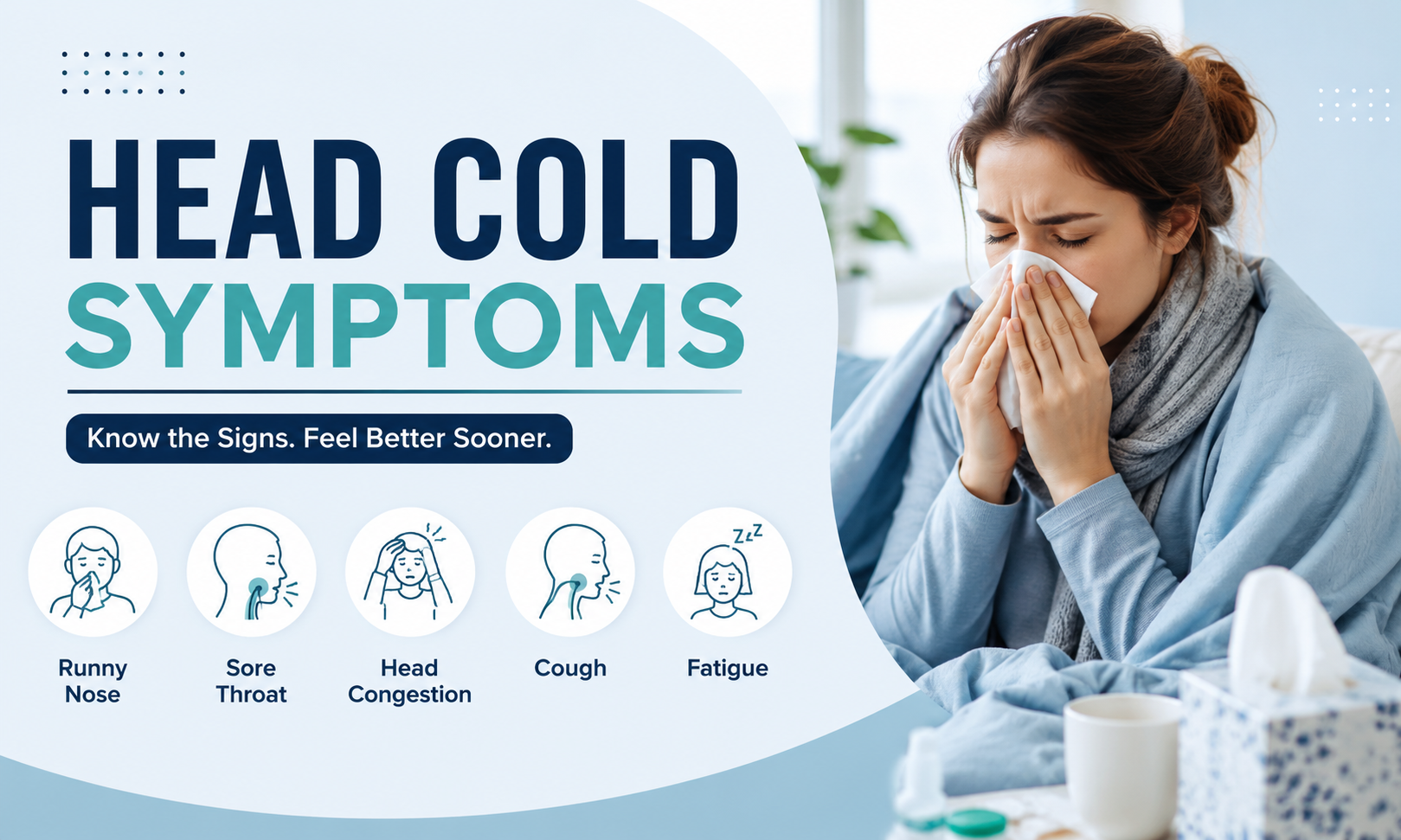
Head Cold Symptoms usually include congestion, runny nose, sneezing, mild sore throat, and sometimes a mild headache or low-grade fever. A head cold is a common cold that concentrates symptoms in the nasal passages and sinuses. It typically starts with a sore throat or scratchy feeling, peaks around day 3 to 5, and resolves within 7 to 10 days. The most useful symptom for distinguishing a head cold from the flu is onset speed: head colds build gradually over a day or two, while the flu tends to hit hard and fast, often within hours.
At a Glance
| Detail | Information |
| Cause | Viral infection, most often rhinovirus (over 200 viruses can cause a cold) |
| Typical Onset | Gradual over 1 to 2 days |
| Peak Symptoms | Around day 3 to 5 |
| Duration | 7 to 10 days for most adults |
| Fever | Usually none in adults, possible low-grade; higher in children |
| Key Distinguishing Feature from Flu | No sudden onset, no high fever, no body aches, milder fatigue |
You Feel Terrible But You Do Not Know What You Actually Have
That is the honest situation most people are in when they search this. Congested, headachy, probably behind on sleep, and trying to figure out whether to push through, call in sick, or go to a doctor.
The most useful thing is not a list of symptoms you already know. It is understanding what makes a head cold different from the things that look almost identical: the flu, a sinus infection, allergies, and COVID-19.
How a Head Cold Actually Progresses, Day by Day
| Day | What Is Happening |
| Day 1 to 2 | Scratchy or sore throat is usually the first sign, often followed quickly by sneezing and a watery runny nose |
| Day 2 to 3 | Congestion builds, nasal discharge may thicken and become cloudy or yellow (this does not automatically mean bacterial infection) |
| Day 3 to 5 | Symptoms peak. Head pressure, coughing, and fatigue are most noticeable now. |
| Day 5 to 7 | Congestion begins to clear, nasal discharge often clears as well |
| Day 7 to 10 | Most adults have recovered. A lingering mild cough is common and not a sign of complications. |
| Beyond day 10 | Symptoms still worsening or not improving after 10 days may suggest a secondary sinus infection developing. |
The Most Useful Comparison: Head Cold vs. Everything Else
| Symptom or Feature | Head Cold | Flu | Sinus Infection | Allergies | COVID-19 |
| Onset speed | Gradual, 1 to 2 days | Sudden, often within hours | Gradual, often after a cold | Seasonal, not illness-like | Gradual, 2 to 14 days after exposure |
| Fever | Rarely in adults; low-grade possible | Common, 100 to 104 F | Sometimes, usually mild | None | Common, often moderate to high |
| Nasal congestion | Yes, prominent | Yes, but secondary | Yes, prominent | Yes, itchy and watery | Possible |
| Body aches | Mild or none | Significant, whole body | Facial pain and pressure | None | Common, can be severe |
| Sore throat | Common, mild | Common, often more severe | Possible from postnasal drip | Possible from drainage | Common |
| Fatigue | Mild | Significant, can last weeks | Mild to moderate | Mild | Can be significant |
| Headache | Mild, from congestion pressure | Common, often severe | Facial pressure and headache | Possible | Common |
| Duration | 7 to 10 days | 7 to 10 days, fatigue longer | 1 to 4 weeks | As long as allergen exposure | Varies widely |
| Loss of smell or taste | Possible but uncommon | Uncommon | Possible with severe congestion | Possible | More common, can be prolonged |
The One Question That Clears Up Most of the Confusion
When did it start and how fast did it come on?
A head cold announces itself subtly: a slightly scratchy throat in the evening, waking up the next morning with a runny nose. If you can remember feeling fine yesterday and feeling genuinely terrible today, especially with a fever and body aches, that pattern points toward flu rather than a cold.
If symptoms have been building slowly over a few days and are concentrated mostly in your nose and head without much body involvement, a head cold is the more likely explanation.
The Yellow Mucus Myth Worth Knowing
Thick, yellow, or even green nasal discharge during a cold is very commonly misread as a sign of bacterial infection requiring antibiotics. According to sources including the Cleveland Clinic and Mayo Clinic, discolored mucus is a normal part of the immune response to a viral cold and does not by itself indicate a bacterial sinus infection.
Mucus changes color as infection-fighting white blood cells are shed. That process is the immune system working, not a sign that antibiotics are needed.
Color alone is not a reliable indicator of whether an infection is bacterial. Duration and pattern matter more: symptoms that continue to worsen after day 7 to 10 or include significant facial pain and pressure are better signs that a secondary bacterial sinus infection may have developed.
When a Head Cold Becomes a Sinus Infection
Colds create the perfect environment for sinus infections because swelling in the nasal passages blocks the sinus openings, trapping fluid where bacteria and viruses can multiply.
The Cleveland Clinic notes that a sinus infection is worth suspecting when cold symptoms are still worsening after 10 days, or when facial pressure and pain around the cheeks, forehead, and nose are significant rather than just mild headache from congestion.
Most viral sinus infections clear without antibiotics. Bacterial sinus infections may benefit from them, but a clinician visit is the right step to make that determination rather than treating yourself.
What Actually Helps at Home
- Rest: there is no shortcut here. The immune response is metabolically expensive and sleep is when most of that work happens.
- Fluids: staying well hydrated helps thin mucus, which makes it easier to clear and reduces the pressure and headache that come with congestion.
- Saline nasal rinse: a neti pot or saline spray helps flush mucus and irritants from the nasal passages. Research consistently supports it as one of the more effective self-care tools for head cold symptoms.
- Decongestants: oral decongestants like pseudoephedrine reduce swelling in the nasal passages and help with congestion, but are not recommended for people with high blood pressure without checking with a doctor.
- Honey for cough: a tablespoon of honey has more evidence behind it for reducing cough severity than many over-the-counter cough syrups, particularly in children over age one.
- Steam and humidity: a warm shower or humidifier can temporarily ease congestion, though the effect is short-lived.
What Does Not Actually Help
- Antibiotics: colds are caused by viruses, not bacteria. Antibiotics have no effect on viral infections and taking them unnecessarily contributes to antibiotic resistance.
- Most OTC cold remedies: systematic reviews have found that most multi-symptom cold products provide marginal relief at best. Treating individual symptoms, such as a decongestant for congestion, tends to be more effective than combination products.
- Vitamin C after the fact: evidence for vitamin C reducing cold duration when started after symptoms begin is weak. It may have a modest preventive effect for people under heavy physical stress, but is not an effective treatment once a cold has started.
Common Mistakes People Make With Head Colds
- Pushing through and skipping rest: insufficient sleep genuinely impairs immune function. Working through a cold without rest tends to extend recovery rather than shorten it.
- Demanding antibiotics for colored mucus: yellow or green discharge is part of the normal viral immune response and does not indicate a bacterial infection on its own.
- Assuming it is just a cold without testing for flu or COVID: flu and COVID can both feel like a bad cold at onset, and both have treatments that work better when started early. Testing takes minutes.
- Waiting too long when symptoms worsen after day 7: improvement should be happening by day 5 to 7. Symptoms that continue to worsen past that point deserve a doctor’s evaluation.
Is a Head Cold Contagious?
Yes, and typically most contagious in the first two to three days of symptoms. The virus spreads through respiratory droplets and through touching contaminated surfaces and then touching the face.
How Is a Head Cold Different From a Chest Cold?
A head cold primarily affects the upper respiratory tract: the nose, sinuses, and throat. A chest cold, more accurately called bronchitis, involves the lower respiratory tract with more prominent cough, chest tightness, and mucus production from the lungs rather than the sinuses.
Can You Have a Head Cold Without a Runny Nose?
It is uncommon but possible. Congestion without much discharge, or discharge that drains mostly down the back of the throat rather than out the nose, can happen. Postnasal drip in this case often causes a sore throat and persistent cough.
Should I Test for COVID If I Think I Have a Head Cold?
Yes, particularly if you have been around people who tested positive or are in a setting where transmission is common. COVID-19 can present with mild symptoms that closely resemble a head cold, especially in vaccinated individuals. An at-home test takes a few minutes and removes the guesswork.
When Should I See a Doctor for a Head Cold?
See a doctor if symptoms worsen significantly after day 7, if you develop a high fever, significant facial pain or pressure, shortness of breath, chest pain, or if you are in a higher risk group such as older adults, pregnant, or immunocompromised.
What Most People Don’t Realize
Most people treat a head cold as a single event with a beginning, middle, and end. Clinically, a cold creates a temporary window of vulnerability during which the already-inflamed nasal and sinus passages are much easier to secondarily infect.
This is why the advice to stay hydrated and use nasal saline isn’t just about comfort. It’s about keeping those passages clear enough that opportunistic bacteria are less likely to find a foothold. Colds that turn into sinus infections usually do so because congestion was severe and prolonged, not because the original virus was somehow worse.
The Two Signal Framework for Deciding What to Do
Rather than trying to diagnose yourself from a symptom list, two practical signals tell you what your next step actually is:
- Signal One, onset and severity: gradual onset with symptoms concentrated in the head and nose, no high fever, no body aches pointing toward flu or COVID. Test for COVID if there is any real doubt.
- Signal Two, direction of travel: are symptoms getting better or worse as the days pass? A cold should be improving by day 5 to 7. Symptoms that are still worsening at that point, especially with facial pain, are the signal to get evaluated rather than continuing to manage at home.
What Should You Do Next?
If you are in the first three days with a gradual-onset, nose-and-head-focused set of symptoms and no high fever, rest, fluids, and saline rinse are your most effective tools right now.
If you are not sure whether you have a cold or flu or COVID, take an at-home test rather than guessing. Flu and COVID both have early treatments that work better when started within the first 48 hours.
Avoid demanding antibiotics for yellow or green mucus alone. If your symptoms have not started improving by day 7 to 10, that is the right point to see a doctor rather than treating colored discharge as a standalone indicator of bacterial infection.
Suggested Internal Links
Add these once matching pages exist on your site, using descriptive anchor text:
- Link to a cold versus flu guide using anchor text like “how to tell a head cold from the flu”
- Link to a sinus infection symptoms guide using anchor text like “when a cold becomes a sinus infection”
- Link to an immune support guide using anchor text like “evidence based ways to support immune function during cold season”
External Sources
- Cleveland Clinic, Is It a Cold or a Sinus Infection?
- Mayo Clinic, COVID-19, Cold, Allergies, and the Flu: Differences
Meta Details (SEO)
Meta Title: Head Cold Symptoms: What You Have and What to Do
Meta Description: Head cold symptoms explained, including how to tell a head cold from the flu, sinus infection, allergies, and COVID-19 using a clear symptom comparison.
URL Slug: /head-cold-symptoms
Schema Type: Article with FAQPage markup for the question sections
Tags: head cold symptoms, cold vs flu, sinus infection symptoms, head cold vs flu, common cold treatment