

Introduction
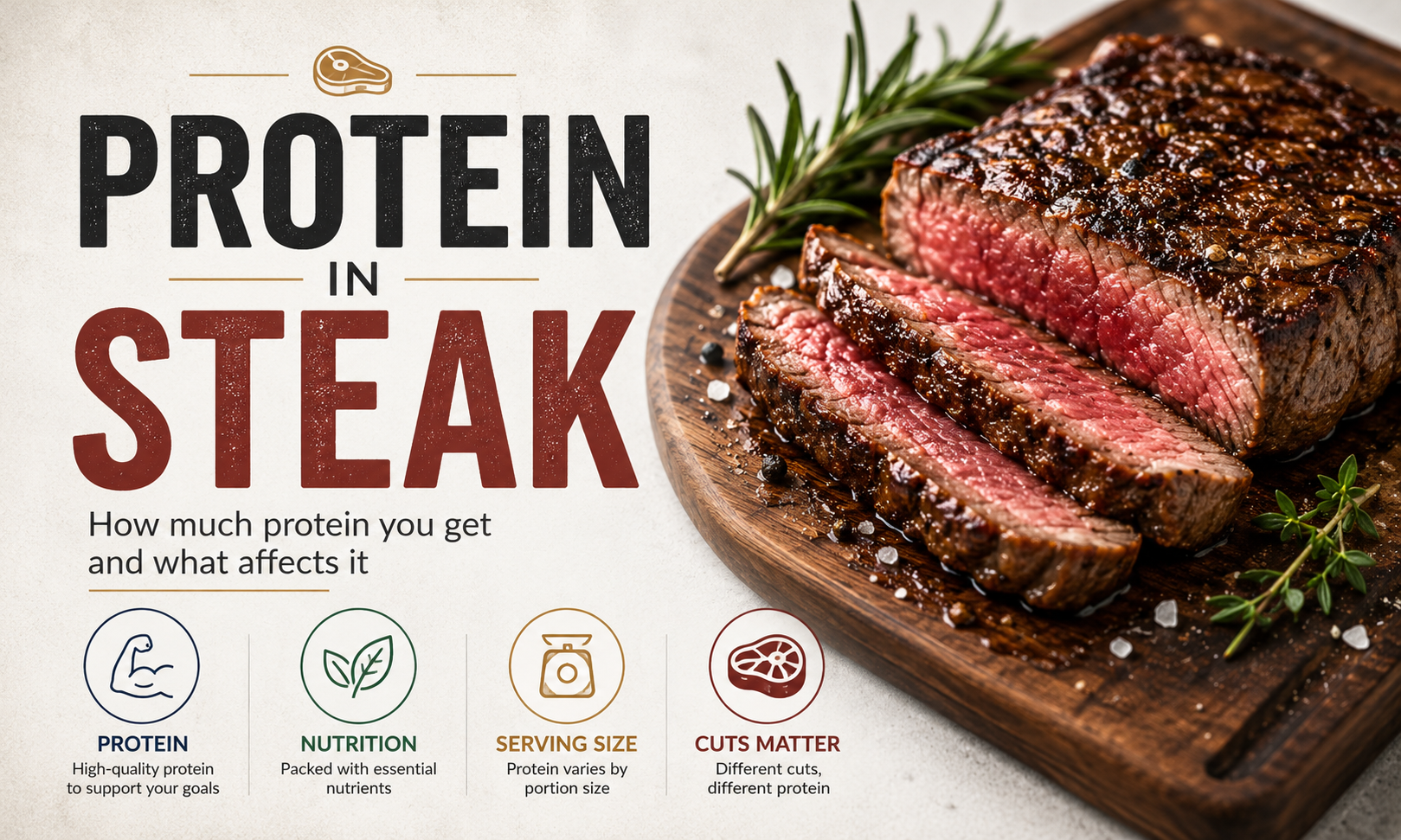
Protein in Steak is a common search topic for people who are tracking their meals, building muscle, following a high-protein diet, or simply curious about the nutrition behind a favorite food. Steak is one of the richest natural sources of protein, but the exact amount depends on the cut, portion size, and how it is cooked.
People look this up because protein needs vary from person to person, and steak is often compared to other meats when planning meals for fitness, weight loss, or general health. Knowing how much protein is actually in steak helps with meal planning, fitness goals, and understanding how it fits into a balanced diet.
In this article, you will learn how much protein is in different cuts of steak, what affects that protein content, the benefits and risks of eating steak regularly, how it compares to other protein sources, and simple tips for including steak in a healthy diet.
Quick Answer: Protein in Steak
A typical 3.5 ounce (100 gram) serving of cooked steak contains roughly 25 to 30 grams of protein, depending on the cut. Leaner cuts like sirloin or filet mignon tend to have a slightly higher protein-to-fat ratio, while fattier cuts like ribeye have a bit less protein by weight because more of the weight comes from fat. Steak is considered a complete protein, meaning it contains all nine essential amino acids the body needs.
| Question | Short Answer |
| How much protein is in a 6 oz steak? | About 42 to 50 grams, depending on the cut |
| Is steak a complete protein? | Yes, it contains all nine essential amino acids |
| Which steak cut has the most protein? | Leaner cuts like sirloin and filet mignon |
| Is eating steak for protein healthy? | Yes in moderation, as part of a balanced diet |
Key Takeaways
- A 3.5 ounce serving of steak provides roughly 25 to 30 grams of protein.
- Leaner cuts generally have a higher protein percentage by weight than fattier cuts.
- Cooking method and portion size both affect the final protein and calorie count on your plate.
- Steak is a complete protein source, supplying all essential amino acids the body needs.
- Eating steak in moderation can fit into most healthy diets, but portion and frequency matter.
What Does Protein in Steak Actually Mean?
Simple Meaning of Protein Content
Protein content refers to the grams of protein found in a specific serving size of steak, usually measured per 100 grams or per 3.5 ounce cooked portion. This number changes slightly depending on the cut of beef and how much fat surrounds the muscle tissue.
How Protein From Steak Affects the Body
Protein from steak is broken down into amino acids during digestion, which the body then uses to repair muscle, support immune function, and maintain healthy skin, hair, and nails. Because steak contains all essential amino acids, it is classified as a high-quality, complete protein source.
Who Commonly Looks at Steak’s Protein Content
People following high-protein diets, athletes, bodybuilders, and anyone tracking macronutrients for weight management often pay close attention to how much protein is in the steak cuts they choose.
Why Protein in Steak Matters
Protein is an essential nutrient for building and repairing muscle, supporting metabolism, and keeping you feeling full after meals. Steak is one of the most protein-dense whole foods available, which makes it a popular choice for people trying to meet daily protein targets.
Understanding the protein content of different cuts also helps people make informed choices between leaner and fattier options, manage calorie intake, and compare steak to other protein sources like chicken, fish, or plant-based options.
Factors That Affect Protein Content in Steak
1. Cut of Beef
Leaner cuts such as sirloin, flank, and filet mignon generally have a higher protein percentage per gram than fattier cuts like ribeye or T-bone, since fat displaces some of the protein by weight.
2. Portion Size
Protein content scales directly with serving size. A larger steak provides more total protein, even if the protein percentage per gram stays the same.
3. Cooking Method
Grilling, broiling, and pan-searing generally preserve protein content well. Cooking methods that render out significant fat, like grilling, can slightly increase the protein percentage per gram in the final cooked product.
4. Doneness Level
Cooking steak longer causes moisture loss, which can slightly concentrate the protein per gram, though the total protein in the piece of meat stays roughly the same.
5. Trimming of Fat
Steak trimmed of visible fat before or after cooking has a higher protein percentage by weight compared to untrimmed cuts.
6. Grass-Fed vs Grain-Fed Beef
Protein content is similar between grass-fed and grain-fed beef, though fat content and fatty acid profile can differ.
Signs You May Need More or Less Protein
Signs You May Benefit From More Protein
- Feeling hungry soon after meals
- Difficulty building or maintaining muscle
- Slow recovery after exercise
Signs You May Be Eating More Protein Than Needed
- Consistently exceeding recommended daily protein intake
- Relying on large steak portions at most meals
- Low intake of fiber-rich foods like vegetables and whole grains
Signs That Need Medical Attention
- Unexplained changes in kidney function or urine patterns
- Digestive discomfort that consistently follows high-protein meals
- Joint pain or gout flare-ups after eating red meat
Effects of Steak’s Protein on the Body
Short-Term Effects
Eating steak can help you feel fuller for longer after a meal, since protein slows digestion and stabilizes blood sugar compared to carbohydrate-heavy meals.
Long-Term Effects
Regularly meeting protein needs supports muscle maintenance, bone health, and metabolic function over time, especially when combined with physical activity.
Positive Effects of Steak’s Protein
Steak provides high-quality, easily absorbed protein along with iron, zinc, and vitamin B12, which support energy production and muscle repair.
Negative Effects of Excess Red Meat Protein
Very high, frequent intake of red meat has been linked in some research to increased risk of certain health conditions, particularly when portions are large and consumption is frequent over many years.
Benefits of Protein in Steak
May Support Muscle Growth and Repair
The complete amino acid profile in steak supports muscle protein synthesis, which is important for athletes and anyone doing regular strength training.
May Help With Satiety and Weight Management
Protein-rich meals like steak can help control appetite and reduce overall calorie intake later in the day.
May Support Iron and Vitamin B12 Levels
Along with protein, steak provides heme iron and vitamin B12, both of which are important for energy and preventing certain types of anemia.
May Support Better Daily Energy
Adequate protein intake, including from steak, helps maintain steady energy levels and supports overall metabolic health.
Risks or Downsides of Relying on Steak for Protein
Steak, especially fattier cuts eaten in large or frequent portions, may not be suitable for everyone. People with heart disease, high cholesterol, kidney conditions, or gout should be mindful of portion size and frequency. Charring or overcooking steak at very high temperatures may also produce compounds that some research associates with health risks when consumed frequently over long periods.
Who Should Be Careful With Steak Consumption
- People with chronic kidney disease, since high protein intake can strain kidney function
- People with gout, since red meat can trigger flare-ups
- People with high cholesterol or heart disease, especially with fattier cuts
- Pregnant women, who should ensure steak is cooked thoroughly
- People with a history of certain cancers, who may be advised to limit red meat intake
- Anyone on a medically prescribed low-protein diet
Best Ways to Get the Most Out of Steak’s Protein
- Choose leaner cuts like sirloin, flank, or filet mignon for a higher protein-to-fat ratio.
- Trim visible fat before cooking to reduce excess calories while keeping protein intact.
- Pair steak with vegetables and whole grains for a more balanced meal.
- Watch portion sizes, aiming for roughly a palm-sized serving, around 3 to 4 ounces.
- Use grilling, broiling, or pan-searing instead of deep frying to limit added fat.
- Avoid charring meat at very high heat for extended periods.
- Balance steak meals with other protein sources like fish, poultry, eggs, or legumes throughout the week.
- Speak with a doctor or dietitian if you have a medical condition that affects protein needs.
Protein Content by Popular Steak Cuts
| Steak Cut (3.5 oz / 100 g cooked) | Approximate Protein |
| Sirloin | 29 to 31 grams |
| Filet Mignon (Tenderloin) | 28 to 30 grams |
| Ribeye | 24 to 27 grams |
| T-Bone | 26 to 28 grams |
| Flank Steak | 28 to 30 grams |
| New York Strip | 26 to 29 grams |
Steak vs Chicken Breast for Protein
| Feature | Steak | Chicken Breast |
| Protein (3.5 oz cooked) | About 25 to 30 grams | About 31 grams |
| Main benefit | Higher iron and vitamin B12 content | Lower fat and calorie count |
| Main risk | Higher saturated fat in some cuts | Lower iron content than red meat |
| Best for | Iron support and richer flavor meals | Lean bulking or calorie-controlled diets |
Myths and Facts About Protein in Steak
| Myth | Fact |
| All steak cuts have the same amount of protein. | Protein content varies by cut, mainly due to differences in fat content. |
| Well-done steak has more protein than rare steak. | Total protein stays roughly the same regardless of doneness, though moisture loss can slightly change protein per gram. |
| Eating more steak always means more muscle. | Muscle growth depends on total protein intake, training, and overall diet, not steak alone. |
| Steak protein is not as good as plant protein. | Steak is a complete protein with all essential amino acids, while many plant proteins need to be combined to be complete. |
What Nutrition Experts Say About Steak and Protein
General dietary guidance from major nutrition organizations classifies lean beef, including many steak cuts, as a good source of high-quality protein, iron, zinc, and vitamin B12 when eaten as part of a balanced diet. Most guidance recommends choosing leaner cuts more often and moderating portions of fattier cuts and processed red meat.
Recommended daily protein intake varies by body weight, activity level, and individual health goals, so it is best to speak with a doctor or registered dietitian for personalized advice.
When Should You See a Doctor or Dietitian?
Consider speaking with a doctor or registered dietitian if you have kidney disease, gout, heart disease, or are unsure how much protein is appropriate for your body and goals. Also seek medical advice if you notice digestive issues, joint pain, or other symptoms that seem linked to your intake of red meat.
Tips for Including Steak in a Balanced Diet
- Choose leaner cuts most of the time and save fattier cuts for occasional meals
- Keep portions to roughly 3 to 4 ounces per serving
- Balance red meat with fish, poultry, legumes, and plant-based proteins during the week
- Pair steak with vegetables and whole grains rather than refined carbohydrates
- Avoid excessive charring when grilling at high heat
- Get regular checkups if you have a condition affected by protein or red meat intake
Final Takeaway
Steak is one of the richest natural sources of complete protein, typically providing 25 to 30 grams per 3.5 ounce serving depending on the cut. It offers real benefits for muscle repair, satiety, and nutrient intake, but portion size, cut choice, and frequency matter for long-term health. Choosing leaner cuts, watching portions, and balancing steak with other protein sources is the best approach for most people.
Frequently Asked Questions
Is steak good or bad for protein intake?
Steak is a good source of high-quality, complete protein and can be part of a healthy diet when eaten in reasonable portions.
How much protein is in an average steak dinner?
A typical 6 to 8 ounce steak provides roughly 42 to 65 grams of protein, depending on the cut and portion size.
Does cooking method change the protein content?
Cooking method has only a small effect on total protein, though moisture loss during cooking can slightly change the protein amount per gram.
How can I get more protein from steak without extra calories?
Choose leaner cuts like sirloin or filet mignon, trim visible fat, and use cooking methods like grilling or broiling instead of frying.
What should I avoid when eating steak for protein?
Avoid very large portions, heavily charred meat, and relying on fattier cuts as your main protein source too often.
When should I worry about how much steak I eat?
Pay attention if you have kidney disease, gout, heart disease, or notice digestive or joint symptoms that seem linked to red meat intake.
Should I see a doctor about my protein intake from steak?
If you have a medical condition affected by protein or red meat, or are unsure about the right amount for your body, a doctor or dietitian can offer personalized guidance.
What is the best way to include steak in a high-protein diet?
Choose leaner cuts, keep portions moderate, balance meals with vegetables and other protein sources, and avoid excessive frequency of fattier or heavily charred steak.