

The Answer, Right Up Front
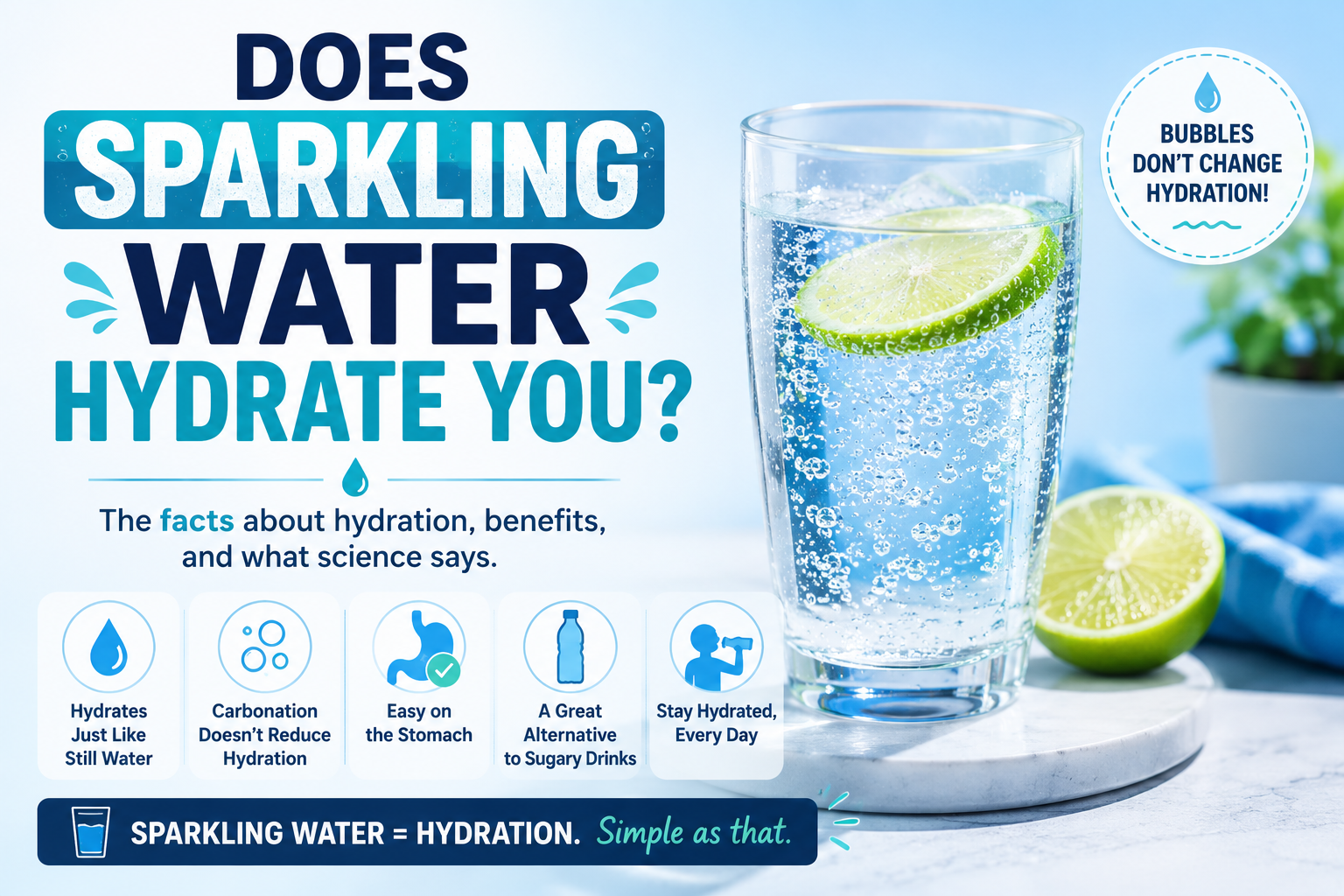
Yes, does sparkling water hydrate you is one of the most searched beverage questions, and the science is clear: sparkling water hydrates just as effectively as still water. The carbonation does not reduce its ability to replace fluids, because the base of both drinks is the same compound, H2O. Whether it comes from a can of seltzer or a glass from the tap, your body absorbs and uses the water content the same way.
That said, there are a few nuances worth understanding, particularly for people with acid reflux, those exercising heavily, or anyone choosing between the many different types of sparkling water on the market. Much like how what you eat influences your overall physical and mental wellbeing, what you drink daily plays a similarly important role in how your body functions and feels.
Quick Reference
| Question | Answer |
| Is sparkling water as hydrating as still water? | Yes, equally hydrating according to multiple studies |
| Does carbonation reduce hydration? | No, the water content is absorbed the same way |
| Is it better than soda for hydration? | Yes, significantly, especially plain unsweetened sparkling water |
| Are all sparkling waters the same? | No, tonic water contains sugar and should not be treated as plain water |
| Should you drink it during exercise? | Still water is generally more comfortable; carbonation can cause bloating mid-workout |
Key Facts to Know
- Sparkling water has the same hydration index as still water, confirmed by published research using the Beverage Hydration Index.
- Carbonation adds CO2 gas but does not change the water molecules themselves.
- Not all sparkling waters are equal: plain seltzer, mineral water, club soda, and tonic water are different products.
- Tonic water contains added sugar and is not a substitute for plain sparkling water.
- For most people, choosing sparkling water over sugary drinks is a clear nutritional win.
What Sparkling Water Actually Is
The Basics of Carbonation
Sparkling water is plain water that has been infused with carbon dioxide gas under pressure. When you open the bottle or can, the pressure drops and the gas begins to escape as bubbles. The water molecules themselves are unchanged, which is why the body absorbs and uses sparkling water for hydration in exactly the same way as still water.
The Four Main Types and Why They Matter
| Type | What It Is | Added Ingredients? |
| Seltzer water | Plain water artificially carbonated | None typically; some have natural flavor |
| Club soda | Carbonated water with added minerals | Small amounts of sodium, potassium |
| Sparkling mineral water | Naturally carbonated at the spring source | Natural minerals (calcium, magnesium) |
| Tonic water | Carbonated water with quinine and sugar | Yes, sugar or high fructose corn syrup |
Tonic water is often mistaken for plain sparkling water, but it contains added sugar and should not be counted as a sugar-free hydration option.
Why People Ask Whether It Hydrates
The question comes up because carbonation changes how water looks, feels, and tastes, which leads many people to assume it must behave differently in the body. There’s also a long-standing belief that fizzy drinks, as a category, are bad for hydration, partly because sodas with caffeine and sugar genuinely do have a lower net hydration value. Sparkling water without added sugar or caffeine shares none of those drawbacks.
The Science of Sparkling Water and Hydration
What the Beverage Hydration Index Shows
A key piece of research measured the hydration effect of 13 different beverages, including still water, sparkling water, milk, juice, and sports drinks, using a metric called the Beverage Hydration Index (BHI). Sparkling water scored the same hydration index as still water, confirming that carbonation has no measurable negative effect on the body’s ability to absorb and retain fluid.
What Happens in the Body
When you drink sparkling water, the water molecules are absorbed through the intestinal wall and enter the bloodstream exactly as they would from still water. The carbon dioxide gas is either belched out or absorbed and exhaled through the lungs. It does not interfere with cellular hydration, blood volume, or any other hydration-dependent process.
What Researchers at the Cleveland Clinic Say
According to registered dietitian Lauren Sullivan at the Cleveland Clinic, sparkling water is just as hydrating as its still counterpart, and swapping one or two glasses of still water per day for plain sparkling water carries no hydration penalty for most people. The same guidance emphasizes choosing varieties with no added sugar to get the full benefit.
When Sparkling Water May Be Slightly Less Ideal
During or After Intense Exercise
During high-intensity workouts, carbonation can cause a feeling of fullness or bloating that may make it harder to drink the volume of water your body actually needs. This is a comfort issue, not a chemistry one, but it’s a practical reason why many athletes and fitness professionals prefer still water during training.
For People With Acid Reflux or GERD
The carbonation in sparkling water can increase gas and pressure in the stomach, which may worsen symptoms in people who experience gastroesophageal reflux disease or are prone to bloating. Still water is generally the more comfortable choice in these cases.
For Dental Health Over the Long Term
Sparkling water is slightly more acidic than still water, with a pH of around 5 to 6, because carbonation forms carbonic acid. While this is far less acidic than soda or fruit juice, regularly swishing or holding sparkling water against teeth over long periods could contribute to enamel erosion. Alternating with plain water and maintaining good oral hygiene largely eliminates this risk for most people.
For Young Children and Infants
Still water is generally recommended for young children and infants. The carbonation is not harmful but can cause discomfort for small stomachs and may reduce overall fluid intake if the bubbles feel unpleasant.
Short and Long-Term Effects on the Body
Immediate Effects
Sparkling water hydrates the body just as quickly as still water. Some people report feeling fuller faster from the carbonation, which can reduce how much they drink in one sitting, though it doesn’t affect the quality of hydration delivered.
Potential Digestive Benefits
Research has found that carbonated water can help improve swallowing ability, ease constipation in some people, and produce a short-term feeling of fullness that may help with appetite control. These effects are modest but real.
Long-Term Regular Use
For most healthy adults, drinking plain unsweetened sparkling water as part of regular fluid intake has no known negative long-term effects. It remains a calorie-free, sugar-free option that supports daily hydration goals.
Benefits of Choosing Sparkling Water
May Help You Drink More Water Overall
People who find plain still water unappealing are often more consistent about reaching their daily hydration targets when sparkling water is available, since the texture and slight flavor variety makes drinking more enjoyable.
A Much Better Alternative to Soda
Replacing sugary sodas with plain sparkling water removes a significant source of added sugar and empty calories from the diet without any reduction in hydration benefit.
May Support Digestion
Carbonated water has been shown in studies to improve feelings of fullness after meals and ease mild digestive discomfort, including constipation, for some individuals.
Mineral Water Adds Small Nutritional Value
Naturally sparkling mineral waters, such as those sourced from springs, contain trace amounts of calcium and magnesium. While not a significant nutritional source, these minerals contribute modestly to daily intake.
Who Should Be Extra Mindful About Their Sparkling Water Choices
- People with acid reflux or GERD, who may find carbonation worsens symptoms
- Those with IBS or sensitive digestive systems prone to bloating
- Competitive athletes or heavy exercisers who need to consume large volumes of fluid quickly
- People with sensitive teeth or existing enamel concerns
- Anyone buying flavored sparkling waters who should check labels for added sugar or sweeteners
How to Choose the Right Sparkling Water
- Read the Ingredient List, Not Just the Front Label — Look for zero added sugar, no artificial sweeteners, and minimal sodium unless you specifically want mineral content.
- Choose Plain Seltzer as Your Default — Unflavored seltzer is the simplest, most versatile option for everyday hydration.
- Avoid Tonic Water as a Hydration Drink — It looks like sparkling water but contains sugar and is better thought of as a mixer.
- Try Naturally Sparkling Mineral Water for Variety — Options like San Pellegrino or Perrier offer trace minerals and a naturally occurring carbonation.
- Alternate With Still Water If You Have Sensitive Teeth — Rinsing with plain water after sparkling water further reduces any acidity exposure to enamel.
- Use It to Replace Soda, Not to Replace Still Water Entirely — A mix of both keeps dental and digestive factors manageable.
Sparkling Water vs Still Water: Side by Side
| Factor | Sparkling Water | Still Water |
| Hydration effectiveness | Equal | Equal |
| Best for intense exercise | Less ideal due to bloating | Preferred for heavy workouts |
| Dental considerations | Slightly more acidic | Neutral, best for enamel |
| Digestive impact | May ease some digestive issues | Gentle and neutral |
| Added ingredients risk | Check labels for sugar/sodium | No added ingredients |
| Cost | Higher than tap water | Lowest cost option |
| Encourages drinking more | Often yes, due to taste variety | Depends on preference |
Myths About Sparkling Water Worth Clearing Up
| Myth | Reality |
| Sparkling water dehydrates you | It hydrates equally to still water; the CO2 does not cancel out hydration |
| Carbonation weakens bones | No reliable evidence links plain sparkling water to bone density loss |
| It’s the same as drinking soda | Plain sparkling water has no sugar, calories, or additives; soda has all three |
| The bubbles damage your stomach lining | Carbonation does not damage the stomach lining in healthy people |
What Health Organizations and Experts Say
The American Heart Association and Cleveland Clinic both confirm that plain sparkling water is a healthy, hydrating alternative to still water for most adults. Nutrition researchers consistently note that the best hydration strategy is the one you’ll actually stick to, and for many people, the texture and variety of sparkling water makes it easier to meet daily fluid goals. Just as making informed choices about what you eat affects your long-term health outcomes, choosing beverages without added sugar is one of the simplest adjustments that benefits hydration and overall wellbeing.
When to Speak With a Doctor or Dietitian
If you experience persistent bloating, digestive discomfort, or acid reflux from sparkling water that doesn’t improve after switching to still water, it’s worth discussing with a doctor. A registered dietitian can also help you understand how your overall fluid intake fits into your broader nutritional goals, particularly if you are managing diabetes, kidney conditions, or a restricted diet.
Simple Daily Hydration Tips
- Aim for roughly 2 to 3 liters of fluid per day for most adults, adjusted for activity level and climate
- Use sparkling water as a soda replacement rather than a substitute for all still water
- Check labels on flavored sparkling water for added sugars, which can quietly add up
- Drink still water during workouts to avoid bloating from carbonation
- Keep a reusable bottle filled and visible to stay consistent with hydration throughout the day
- Pay attention to urine color as a simple hydration guide: pale yellow signals good hydration, dark yellow signals you need more fluid
The Bottom Line
If you enjoy sparkling water and it helps you drink more throughout the day, it’s an excellent choice. Plain, unsweetened sparkling water hydrates just as well as still water, pairs well with meals, and is far healthier than soda or sugary drinks. Just check labels, go easy on it around workouts, and alternate with still water if you have sensitive teeth or digestive concerns.
Frequently Asked Questions
Does sparkling water count toward your daily water intake?
Yes, plain sparkling water counts fully toward your daily fluid intake, just as still water does.
Is it okay to drink sparkling water every day?
Yes, for most healthy adults, drinking plain unsweetened sparkling water daily is perfectly safe and a good hydration habit.
Does sparkling water make you gain weight?
Plain sparkling water with no added sugar or calories does not cause weight gain. Flavored varieties with added sweeteners should be checked for caloric content.
Can sparkling water replace still water entirely?
While it can cover most of your hydration needs, it’s generally sensible to include some still water daily, particularly for dental health and during exercise.
Is sparkling water good for kidney stones?
Staying well hydrated, including with sparkling water, helps prevent kidney stones in general. However, some sparkling mineral waters are high in sodium, which is worth monitoring for people with a history of kidney stones.
Does the type of sparkling water matter for hydration?
All plain, unsweetened sparkling water varieties hydrate equally well. Tonic water, which contains sugar, is the main exception to avoid as a hydration drink.
Is sparkling water bad for your stomach?
For most people, no. For those with GERD, IBS, or acid reflux, carbonation may worsen symptoms, and still water is generally the more comfortable choice.
Why does sparkling water make me feel full faster?
The carbonation creates a temporary feeling of fullness by expanding in the stomach. This is harmless but may cause you to drink less in one sitting than you would with still water.