

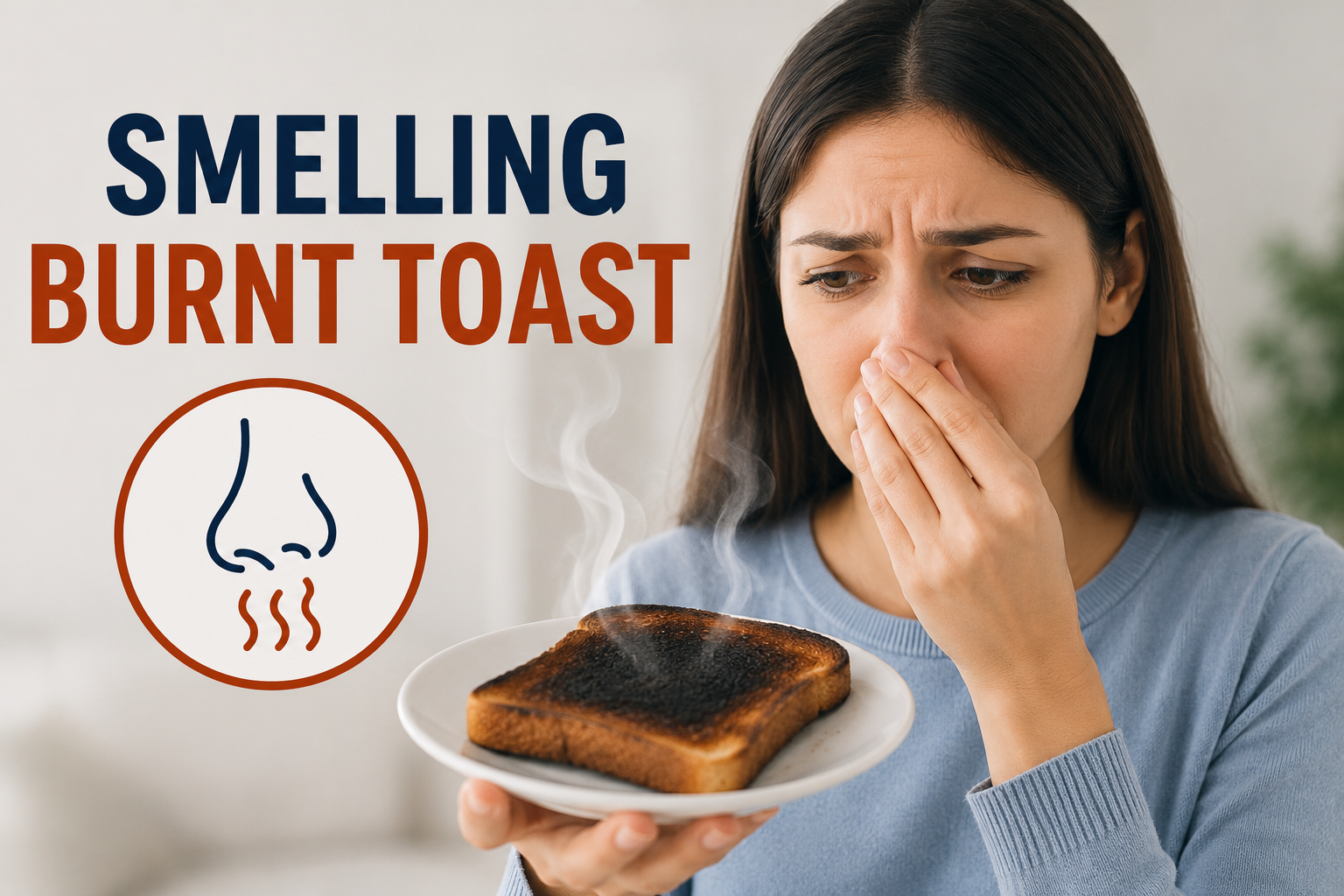
What a phantom burning odor can mean, the most common causes, which stroke signs matter, and when to contact an ENT or neurologist
| Quick fact | What to know |
| Medical term | Phantosmia, meaning the perception of an odor that is not present. |
| Is it a classic stroke sign? | No. A burnt smell by itself is not a typical warning sign, although a stroke can sometimes affect smell processing. |
| Common causes | Sinus or upper-respiratory illness, postviral smell changes, migraine, medicines, head injury, chemical exposure, and seizures. |
| First safety step | Confirm that there is no real smoke, overheated appliance, electrical problem, or other environmental source. |
| Call 911 when | The smell occurs with sudden balance loss, vision change, facial droop, one-sided weakness or numbness, speech trouble, severe confusion, or a seizure. |
| Routine evaluation | Recurring or persistent episodes should be discussed with a primary-care clinician, ENT specialist, or neurologist. |
| The short answer
A phantom smell of burnt toast is usually not a stroke warning by itself. The symptom is called phantosmia and can occur with nasal inflammation, a recent viral illness, migraine, medication effects, head injury, or focal seizures. Stroke remains an emergency possibility when the smell appears with sudden neurologic symptoms, so use the full symptom pattern rather than the odor alone. |
Experiencing smelling burnt toast when nothing is burning can be unsettling, especially because the symptom is often associated online with stroke. In medical terms, this is usually described as a phantom odor. The smell may seem to come from one nostril, both nostrils, a room, clothing, or food even though no one else detects it.
Before assuming the sensation is neurological, check for a real source without putting yourself at risk. Ask whether another person smells it, look for smoke or an overheated appliance, and pay attention to alarms. Leave the building and call emergency services if there may be a fire, electrical hazard, or harmful fumes.
Does a Burnt Toast Smell Mean You Are Having a Stroke?
Usually, no. A sudden burning odor is not considered a classic stroke warning sign. Stroke can damage areas involved in smell perception, so reduced, lost, distorted, or phantom smells may occur during or after a stroke in some people. However, an isolated odor without other neurologic changes is more likely to have another explanation.
The safest rule is not to use the smell as a home stroke test. A stroke can present with only one recognized warning sign, and symptoms may be painless. If there is sudden weakness, numbness, speech trouble, visual change, severe imbalance, confusion, or an unusual severe headache, call 911 immediately even if the symptoms begin to improve.
Phantosmia Versus Parosmia
Phantosmia means sensing an odor that is not present. Parosmia means a real odor is present, but it smells wrong, such as coffee smelling burned or food smelling like chemicals. The National Institute on Deafness and Other Communication Disorders explains these smell disorders and lists upper-respiratory illness, smoking, nasal growths, head injury, chemical exposure, medicines, and nervous-system conditions among possible causes.
The distinction matters because a person recovering from a cold or COVID-19 may notice that real foods smell burned, rotten, or metallic, which is more consistent with parosmia. Someone who smells smoke in an empty room when no odor source exists is describing phantosmia.
Common Reasons You May Smell Burnt Toast
| Possible cause | Clues that may accompany it | Typical next step |
| Nasal or sinus inflammation | Congestion, facial pressure, drainage, allergies, or reduced smell | Primary-care or ENT evaluation if persistent |
| Postviral smell change | Started after a cold, flu, or COVID-19; foods may also smell distorted | Monitor recovery and discuss persistent symptoms |
| Migraine | Headache, light or sound sensitivity, nausea, or a familiar aura pattern | Medical review, especially for a new aura |
| Focal seizure | Very brief, repetitive odor with fear, deja vu, staring, lip smacking, or altered awareness | Prompt neurologic evaluation |
| Medicine or chemical exposure | Began after a new drug, dose change, solvent, pesticide, smoke, or workplace exposure | Review exposures and medicines with a clinician |
| Head injury or neurologic disease | Recent trauma, memory change, movement symptoms, or progressive neurologic problems | Cause-specific medical evaluation |
Sinus Problems and Recent Illness
Inflamed nasal passages can interfere with the signals traveling from odor receptors to the brain. A cold, sinus infection, allergy flare, or nasal polyp may cause reduced smell, distortion, or occasional phantom odors. This guide to head cold symptoms and sinus warning signs explains how congestion, facial pressure, symptom duration, and worsening after initial improvement can help separate a routine viral illness from a problem that needs medical review.
Migraine and Focal Seizures
Some people experience unusual smells as part of a migraine aura, although visual symptoms are more common. A temporal-lobe seizure can also begin with a brief, highly stereotyped smell, sometimes accompanied by sudden fear, deja vu, stomach rising, staring, repetitive mouth movements, confusion, or a gap in memory. A first suspected seizure, loss of consciousness, injury, pregnancy, or an episode lasting five minutes requires emergency assessment.
Medicines, Injuries, and Less Common Causes
A new medicine, a dose change, smoking, chemical exposure, dental disease, radiation treatment, or a head injury can change smell perception. Parkinson disease, Alzheimer disease, and brain tumors are possible but much less common explanations. Do not stop a prescription suddenly. Bring a complete medication and supplement list to the appointment so the clinician can look for a timing connection.
| A rare cause should not become the first assumption
Phantom smells are real, but they are not specific to one diagnosis. A recurrent odor deserves evaluation, especially with neurologic symptoms, but it does not automatically mean stroke, epilepsy, Parkinson disease, or a brain tumor. |
Stroke Signs That Matter More Than the Smell
Use the B.E. F.A.S.T. warning signs: sudden balance loss, eye or vision change, face drooping, arm weakness, speech difficulty, and time to call 911. The American Stroke Association advises calling 911 immediately when any of these signs appear. Do not drive yourself and do not wait to see whether symptoms disappear.
Sudden one-sided numbness can be easy to dismiss when it begins in a hand, leg, or foot. Conway Behavioral Health has a related explanation of when foot numbness may be a stroke warning, including why numbness with facial droop, slurred speech, confusion, or weakness needs emergency care.
What to Do When the Smell Happens
| Situation | What to do | Why |
| Possible real smoke or fumes | Leave the area safely and contact emergency services | A real environmental hazard must be ruled out first |
| Smell plus stroke signs | Call 911 immediately | Stroke treatment is time-sensitive |
| Smell plus altered awareness or seizure activity | Use emergency care for a first seizure, prolonged episode, injury, or poor recovery | Focal seizures can begin with an odor aura |
| Brief isolated episode that fully resolves | Record the time, duration, nostril, recent illness, headache, and medicines | A clear history helps identify patterns |
| Recurring or persistent episodes | Arrange a medical appointment | ENT or neurologic testing may be needed |
How Doctors Evaluate Phantom Smells
Evaluation usually begins with questions about when the odor started, whether it occurs in one or both nostrils, how long it lasts, whether it is triggered by real smells, and whether it accompanies headache, altered awareness, weakness, or recent illness. The clinician may examine the ears, nose, mouth, teeth, and nervous system and review medicines and exposures.
Depending on the findings, testing may include a supervised smell test, nasal endoscopy, sinus imaging, brain CT or MRI, or an EEG to look for abnormal electrical activity. Not everyone needs every test. The symptom pattern determines whether an ENT specialist, neurologist, dentist, or another clinician is most appropriate.
Treatment Depends on the Cause
Phantom smells sometimes fade as a viral illness or nasal inflammation resolves. Treatment may involve allergy or sinus care, changing a contributing medicine under prescriber guidance, migraine prevention, antiseizure treatment, or management of another identified condition. Saline spray or irrigation may help congestion, but use only a safe product and follow hygiene instructions.
Avoid starting antibiotics, steroid medicine, or neurologic drugs without a diagnosis. Strong fragrances may briefly mask the sensation but can trigger headache or irritation. If the odor reduces appetite, makes food taste unpleasant, or causes weight loss, tell the clinician because smell changes can affect nutrition and quality of life.
When to See a Doctor
- The phantom smell keeps returning, lasts for days, or becomes more frequent.
- It began after a head injury, new medicine, chemical exposure, or recent infection.
- Episodes include headache, deja vu, staring, confusion, memory gaps, or unusual movements.
- There are changes in vision, hearing, taste, balance, strength, speech, or personality.
- The smell interferes with eating, sleep, work, or safety.
- There is unexplained weight loss, severe fatigue, or another progressive symptom.
Frequently Asked Questions
Does smelling burnt toast always mean a stroke?
No. It is not a typical stroke warning by itself. Call 911 when it occurs with sudden balance, vision, facial, arm, speech, numbness, or confusion symptoms.
Can anxiety cause a phantom burning smell?
Anxiety can increase attention to body sensations and make the experience more distressing, but a recurring phantom smell should not automatically be blamed on anxiety without medical review.
Can COVID-19 make things smell burned?
Yes. Viral illness can cause parosmia, in which real foods or odors smell burned, rotten, or chemical. It can also contribute to other smell changes during recovery.
Can a seizure cause the smell of burnt toast?
A focal seizure can produce a brief unusual odor aura, often with a repeated pattern and other symptoms such as fear, deja vu, staring, or altered awareness.
How long can phantosmia last?
It may last seconds, minutes, or recur over weeks. Duration alone does not identify the cause, so persistent or repeated episodes should be evaluated.
Bottom Line
A burnt-toast odor with no real source is usually a smell disorder rather than a standalone stroke warning. Sinus inflammation, a recent viral illness, migraine, medicine effects, head injury, and focal seizures are among the possibilities. The full pattern, not the odor alone, guides the next step.
Check first for a real fire or fumes. Call 911 for any B.E. F.A.S.T. stroke sign, severe confusion, loss of consciousness, or seizure emergency. Arrange a routine medical evaluation when the phantom smell persists or keeps returning.
| Medical disclaimer
This article is for general education and does not diagnose stroke, seizure, migraine, or a smell disorder. Call 911 in the United States for sudden neurologic symptoms, loss of consciousness, seizure lasting five minutes, suspected poisoning, or a possible fire. |