

Introduction
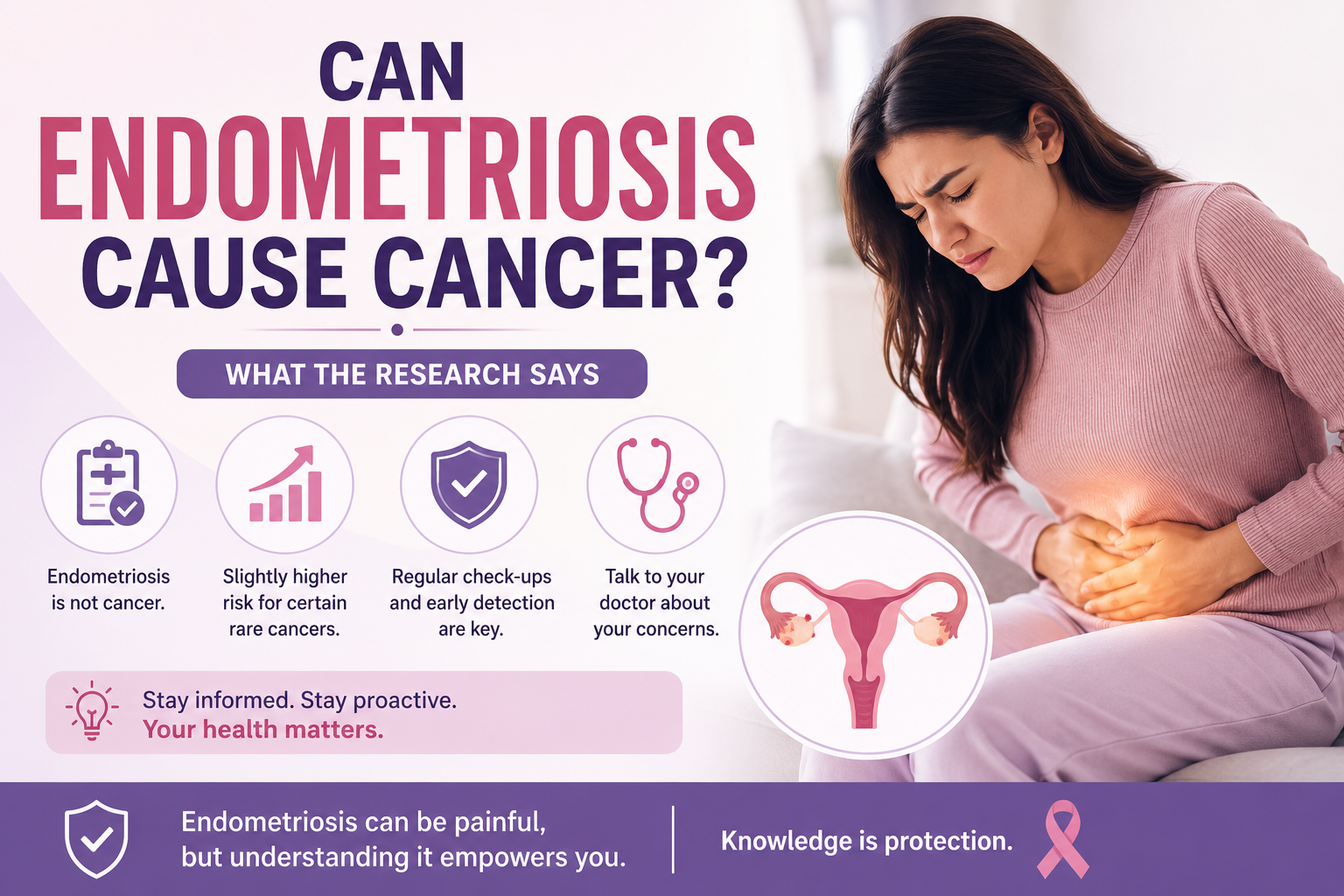
Can endometriosis cause cancer is a question many people with endometriosis ask, especially after reading about links between the two conditions online. Endometriosis is a condition where tissue similar to the uterine lining grows outside the uterus, and while it is not a form of cancer itself, research has found some connection between endometriosis and a slightly increased risk of certain ovarian cancers.
It is important to understand that this risk, while real, remains low in absolute terms for most people with endometriosis. The connection is strongest for specific ovarian cancer subtypes, and most people with endometriosis never develop cancer as a result of it.
In this article, you will learn whether endometriosis can lead to cancer, which cancers are linked to it, why this connection exists, who may be at higher risk, and what signs and follow-up care are worth knowing about.
So, Can Endometriosis Actually Cause Cancer?
Endometriosis itself is not cancer, but research shows it is associated with a modestly increased risk of certain types of ovarian cancer, particularly clear cell and endometrioid ovarian cancer. Studies suggest this risk is roughly two to three times higher than average for these specific subtypes, but the overall absolute risk remains low, since ovarian cancer is uncommon to begin with. Most people with endometriosis will never develop ovarian cancer.
| Question | Short Answer |
| Does endometriosis directly cause cancer? | No, but it is linked to a higher risk of certain ovarian cancers |
| Which cancers are associated with endometriosis? | Mainly clear cell and endometrioid ovarian cancer |
| Is the overall cancer risk high? | No, the absolute risk remains low for most people |
| Does having endometriosis mean I need cancer screening? | Routine ovarian cancer screening is not currently recommended for most cases |
What Are the Key Things to Know?
- Endometriosis is not cancer, but it is linked to a modestly increased risk of certain ovarian cancer subtypes.
- The strongest associations are with clear cell and endometrioid ovarian cancer, sometimes called endometriosis-associated ovarian cancer.
- The overall absolute risk remains low, since ovarian cancer itself is relatively uncommon.
- Ovarian endometriomas, or cysts, are the type of endometriosis most closely linked to this small increased risk.
- Endometriosis-associated ovarian cancers tend to be diagnosed earlier and have a better prognosis than other ovarian cancers.
What Is the Actual Link Between Endometriosis and Cancer?
What Does ‘Endometriosis-Associated Ovarian Cancer’ Mean?
Endometriosis-associated ovarian cancer refers to specific subtypes of ovarian cancer, mainly clear cell and endometrioid carcinoma, that occur more often in people with a history of endometriosis than in the general population. Researchers believe some of these cancers may develop through a gradual transformation of endometriotic tissue over time.
How Might Endometriosis Contribute to Cancer Risk?
Ongoing inflammation, oxidative stress, and high estrogen exposure within endometriotic lesions are thought to contribute to genetic changes that, in rare cases, can lead to malignant transformation, particularly within ovarian endometriomas.
Who Is More Likely to Be Affected by This Link?
People with ovarian endometriomas, long-standing endometriosis, or infertility related to endometriosis appear to have the associations most studied in current research, though most will not develop cancer.
Why Does This Connection Actually Matter?
Understanding the link between endometriosis and cancer helps people make sense of what they read online without becoming unnecessarily alarmed. Because endometriosis is common, affecting a significant number of people of reproductive age, understanding what the research does and does not show is important for informed, balanced decision-making.
This understanding also helps guide conversations with a doctor about individual risk factors, monitoring, and when further evaluation might be appropriate.
What Factors Are Thought to Drive This Connection?
1. Chronic Inflammation
Endometriosis involves ongoing inflammation in the pelvic area, which over long periods may contribute to cellular changes in some cases.
2. Oxidative Stress
Ovarian endometriomas create an environment of oxidative stress that researchers believe may play a role in triggering genetic mutations over time.
3. High Estrogen Exposure
Endometriosis is an estrogen-dependent condition, and prolonged estrogen exposure is thought to contribute to abnormal cell growth in some cases.
4. Genetic Mutations
Research has identified specific mutations, such as in the ARID1A gene, that appear in some cases of endometriosis-associated ovarian cancer, suggesting a stepwise transformation process.
5. Type and Location of Endometriosis
Ovarian endometriomas specifically are more strongly linked to this cancer risk than endometriosis found in other pelvic locations.
6. Duration of the Condition
Long-standing, untreated endometriosis may carry a somewhat higher associated risk than more recently diagnosed or well-managed cases, based on current research patterns.
What Symptoms or Changes Should You Watch For?
What Are Typical Endometriosis Symptoms?
- Pelvic pain, often worse during menstruation
- Pain during intercourse
- Heavy or irregular periods
What Changes Might Be Worth Extra Attention?
- New or worsening pelvic pain that feels different from usual endometriosis pain
- Rapid growth of a known ovarian endometrioma
- Unexplained bloating, abdominal swelling, or early fullness when eating
What Symptoms Need Medical Evaluation?
See a doctor for new or worsening pelvic pain, a cyst that changes in size or appearance on imaging, persistent bloating, unexplained weight loss, or postmenopausal bleeding, since these warrant further evaluation rather than assumption.
What Effects Does This Risk Have on Long-Term Health?
What Does the Research Say About Overall Risk?
Large studies show endometriosis is associated with roughly a two to three-fold increased relative risk of clear cell and endometrioid ovarian cancer, but because these cancers are uncommon overall, the absolute lifetime risk for any individual remains low.
Is the Outlook Different for Endometriosis-Associated Cancers?
Interestingly, research suggests that when ovarian cancer does occur alongside endometriosis, it is often caught at an earlier stage and tends to have a better prognosis than ovarian cancer unrelated to endometriosis.
Does Endometriosis Affect Other Cancer Types?
Current evidence does not show a strong or consistent link between endometriosis and cancers outside of specific ovarian cancer subtypes, and some studies have found no increased risk for extraovarian cancers.
What Are the Benefits of Staying Informed and Monitored?
Can Awareness Help With Earlier Detection?
Understanding your personal risk factors can help you and your doctor decide on an appropriate monitoring plan, particularly if you have ovarian endometriomas.
Does Treating Endometriosis Help Reduce Risk?
Some research suggests that treatments which reduce ovulation and menstruation, such as certain hormonal therapies, may also lower the associated cancer risk, though this is still an active area of study.
Can Regular Checkups Provide Peace of Mind?
Routine gynecologic care, including monitoring known endometriomas, can help catch any changes early and provide reassurance for those concerned about their risk.
What Are the Real Risks Worth Understanding?
It is important to keep this risk in perspective. While studies consistently show a relative risk increase for clear cell and endometrioid ovarian cancer in people with endometriosis, ovarian cancer overall remains uncommon, so the absolute risk for most individuals stays low. Malignant transformation of an endometrioma is considered rare. That said, larger or changing endometriomas, especially in older individuals, may warrant closer monitoring or evaluation by a gynecologist.
Who Should Pay Closer Attention to This Risk?
- People with long-standing ovarian endometriomas
- People diagnosed with endometriosis after age 40
- Anyone with a family history of ovarian or breast cancer
- People with known BRCA or other relevant genetic mutations
- Anyone noticing a cyst that is growing or changing in appearance
- People with endometriosis-related infertility, based on some studied associations
What Can You Do to Stay on Top of This?
- Keep up with regular gynecologic checkups, especially if you have known endometriomas.
- Report any new, worsening, or different pelvic pain to your doctor.
- Ask your doctor about monitoring frequency if you have an ovarian endometrioma.
- Discuss your family cancer history with your doctor to help assess personal risk.
- Consider discussing hormonal treatment options with your doctor, which may help manage both endometriosis symptoms and associated risk.
- Track any changes in symptoms, cyst size, or overall health over time.
- Ask questions during appointments if you are unsure about your specific risk level.
- Avoid unnecessary anxiety by focusing on the low absolute risk while still staying attentive to changes.
What Helps vs What Might Not Be Necessary?
| Generally Helpful | Not Usually Necessary |
| Regular gynecologic follow-up for known endometriomas | Routine ovarian cancer screening for all endometriosis patients |
| Reporting new or changing symptoms promptly | Frequent imaging without a specific clinical reason |
| Discussing personal and family history with your doctor | Assuming diagnosis means cancer is inevitable |
| Considering hormonal management options with your doctor | Ignoring persistent or worsening pelvic pain |
How Does Endometriosis-Associated Ovarian Cancer Compare to Other Ovarian Cancer?
| Feature | Endometriosis-Associated Ovarian Cancer | Other Ovarian Cancer |
| Common subtypes | Clear cell and endometrioid | High-grade serous most common overall |
| Typical age at diagnosis | Often younger, premenopausal | Often older, postmenopausal |
| Stage at diagnosis | More often early-stage | More often diagnosed at a later stage |
| General prognosis | Tends to be more favorable | Varies, often more guarded for advanced high-grade serous |
What Are Common Myths vs the Actual Facts?
| Myth | Fact |
| Endometriosis is a form of cancer. | Endometriosis is a benign, non-cancerous condition, though it has some association with certain ovarian cancer subtypes. |
| Everyone with endometriosis will develop ovarian cancer. | Most people with endometriosis never develop ovarian cancer; the absolute risk remains low. |
| All types of endometriosis carry the same cancer risk. | The increased risk is most associated with ovarian endometriomas, not endometriosis in other locations. |
| There is nothing you can do about this risk. | Regular monitoring and discussing treatment options with a doctor may help manage and track this risk over time. |
What Do Medical Experts and Researchers Say?
Large-scale research, including meta-analyses combining data from hundreds of thousands of women, consistently shows endometriosis is linked to a modestly increased risk of clear cell and endometrioid ovarian cancer, with relative risk estimates commonly cited in the range of roughly two to three times higher than average. Experts also emphasize that this translates to a low absolute risk for most individuals, and that routine ovarian cancer screening is not currently recommended for the general population of people with endometriosis.
Gynecologic oncology specialists generally recommend individualized discussions about monitoring, especially for those with ovarian endometriomas, rather than a one-size-fits-all screening approach.
When Should You Actually See a Doctor About This?
Talk to your doctor if you have new, worsening, or different pelvic pain, a known endometrioma that is growing or changing, unexplained bloating or abdominal swelling, or a family history of ovarian or breast cancer. See a doctor promptly for postmenopausal bleeding, rapid abdominal swelling, or unexplained weight loss, since these symptoms deserve timely evaluation.
Are There Ways to Help Lower Your Risk?
- Discuss hormonal treatment options with your doctor, since reducing ovulation may help lower associated risk
- Keep up with regular gynecologic checkups and imaging as recommended for known endometriomas
- Report new or changing symptoms promptly rather than waiting
- Share your full family cancer history with your doctor
- Consider genetic counseling if you have a strong family history of ovarian or breast cancer
- Maintain overall health through balanced nutrition, movement, and regular medical care
What Is the Bottom Line?
Endometriosis is not cancer, but research does show a modest increase in the risk of certain ovarian cancer subtypes, mainly clear cell and endometrioid, particularly in those with ovarian endometriomas. The absolute risk remains low for most people, and when these cancers do occur alongside endometriosis, they are often caught earlier and tend to have a better outlook. Staying attentive to new or changing symptoms and keeping up with regular gynecologic care is the most practical way to manage this risk without unnecessary worry.
Frequently Asked Questions
Is having endometriosis good or bad in terms of cancer risk?
Endometriosis is associated with a modestly increased relative risk of certain ovarian cancers, but the overall absolute risk remains low for most people.
What causes the link between endometriosis and ovarian cancer?
Chronic inflammation, oxidative stress, high estrogen exposure, and specific genetic changes are all thought to contribute to this association.
Can this risk change or improve over time?
Some research suggests that treatments reducing ovulation and menstruation may help lower the associated risk, though more research is ongoing.
How can I stay on top of my risk at home?
Track any new or changing symptoms, keep up with scheduled checkups, and communicate openly with your doctor about your history.
What should I avoid doing if I have endometriosis?
Avoid ignoring new or worsening pelvic pain, and avoid skipping recommended follow-up appointments for known endometriomas.
When should I worry about my endometriosis and cancer risk?
Worry if you notice new or different pelvic pain, a growing or changing cyst, unexplained bloating, or postmenopausal bleeding.
Should I ask my doctor for ovarian cancer screening?
Routine screening is not currently recommended for most people with endometriosis, but it is worth discussing your individual risk factors with your doctor.
What is the best way to manage this risk long term?
Regular gynecologic care, prompt reporting of new symptoms, and open communication with your doctor about personal and family history are the best long-term approaches.