

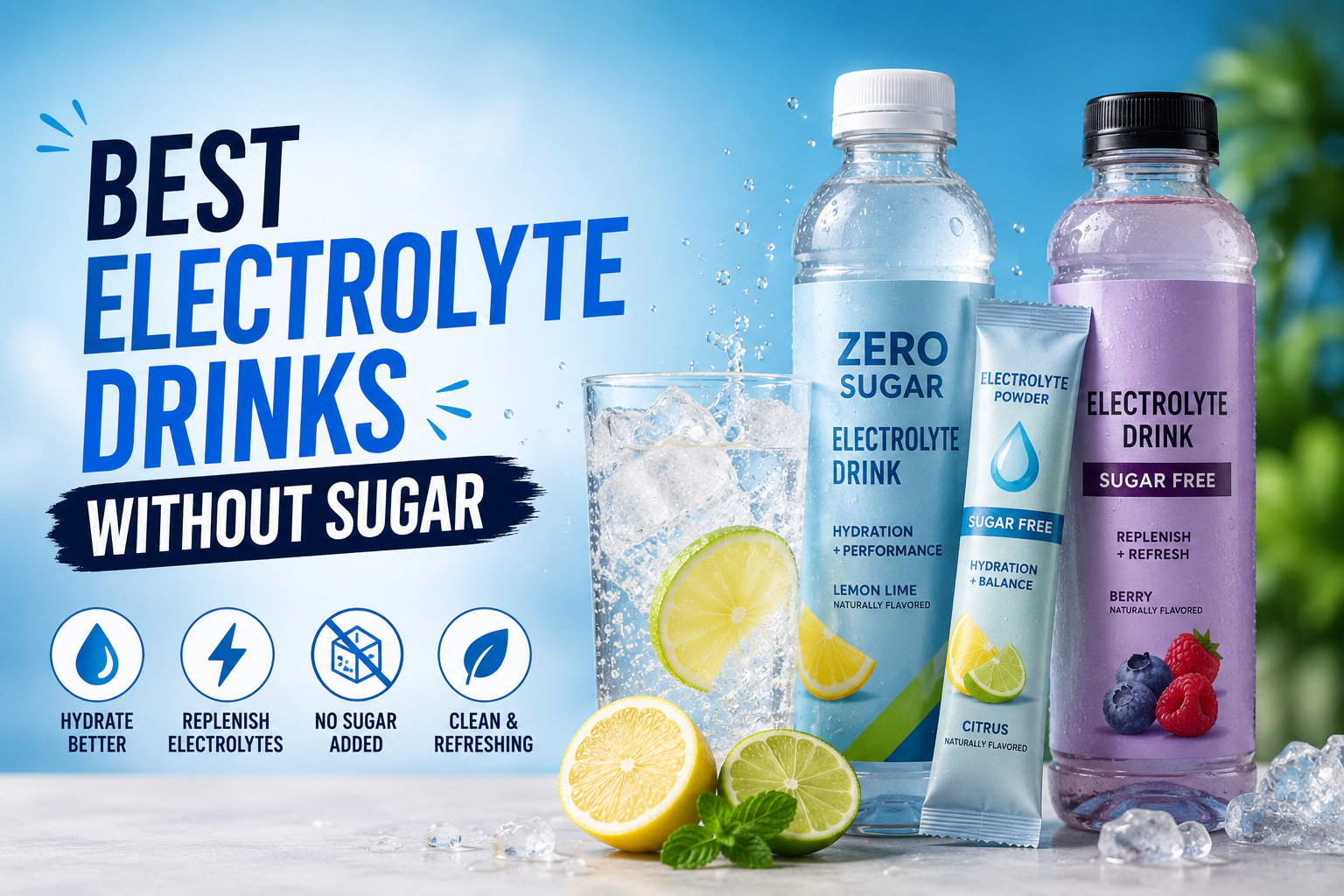
The tricky part about finding the best electrolyte drinks without sugar is that ‘sugar-free’ and ‘sweetener-free’ are not the same claim, and most product labels are happy to let you assume otherwise. A zero-sugar drink can still be loaded with sucralose, acesulfame potassium, or sugar alcohols, none of which are sugar, but all of which are still added sweeteners some people are specifically trying to avoid.
Here’s how to actually parse what you’re buying, which mainstream options genuinely fit a true no-sugar (or fully unsweetened) standard, and how to pick between them based on what you’re actually using electrolytes for.
What These Drinks Are Actually Replacing
Electrolytes, mainly sodium, potassium, magnesium, and chloride, regulate fluid balance, muscle function, and nerve signaling. You lose them through sweat, and replacing only water without them can, in heavy-sweat situations, actually dilute your blood sodium rather than fix the problem. Sugar’s original role in sports drinks was to help transport sodium into cells faster and provide fuel for long workouts, not because electrolytes themselves require sugar to function. For most everyday hydration, sugar isn’t doing much beyond adding calories.
Decoding What ‘No Sugar’ Actually Means on a Label
| Label Claim | What It Actually Contains | True Zero-Sweetener? |
| “Sugar-Free” | Often stevia, monk fruit, sucralose, or sugar alcohols | No, just sugar-free specifically |
| “Zero Sugar” | Same as above, marketing language for the same thing | No |
| “No Artificial Sweeteners” | Usually stevia or monk fruit instead | No, still sweetened, just naturally |
| “Unflavored” or “Unsweetened” | Typically no sweetener of any kind | Yes, this is the label to actually look for |
How Popular Options Actually Compare
| Product | Sweetener | Sodium Level | Best For |
| LMNT Raw Unflavored | None | High (1,000mg) | Heavy sweaters, keto, no sweetener at all |
| Nuun Sport | Stevia | Moderate | Portable tablets, light-to-moderate activity |
| Ultima Replenisher | Stevia | Low-moderate | Everyday sipping, gentle on the stomach |
| Skratch Unsweetened | None | Moderate | Those who want zero sweetener with some flavor customization |
| Pedialyte Zero Sugar | Sucralose/Ace-K | Moderate | Illness recovery, doctor-recommended track record |
Worth noting: several of these use natural sweeteners like stevia rather than being completely sweetener-free, only the unflavored/raw versions of products like LMNT or Skratch meet a true zero-sweetener standard.
Do You Actually Need an Electrolyte Drink, or Just Water?
- Heavy sweat sessions over 60 to 90 minutes, especially in heat: electrolytes are genuinely useful
- Illness with vomiting or diarrhea: electrolyte replacement matters more here than almost any other scenario
- Hangover recovery: electrolytes can help with fluid balance, though they won’t undo alcohol’s other effects
- Short, casual workouts under 45 minutes: plain water is usually entirely sufficient
- General daily hydration for most people: food already provides most electrolyte needs, so a dedicated drink is optional, not essential
Matching the Product to What You’re Actually Doing
- For heavy, prolonged sweating or keto/low-carb needs: look for a high-sodium, fully unsweetened option like raw or unflavored LMNT.
- For everyday, gentle hydration: a lower-sodium, stevia-sweetened option like Ultima or Nuun is usually plenty and easier to drink regularly.
- For illness-related dehydration: a clinically formulated option like Pedialyte’s zero-sugar version has the most established track record.
- For strict sweetener avoidance regardless of use case: check specifically for “unflavored” or “raw” labeling, not just “sugar-free.”
- For sensitive stomachs: stevia and monk fruit tend to be better tolerated than sugar alcohols, which can cause digestive upset in some people.
- Always check the sodium number directly rather than assuming based on brand reputation, this varies more than people expect.
A Few Things Worth Watching Out For
Sugar alcohols like xylitol and erythritol are common zero-sugar sweeteners, but they can cause bloating or digestive discomfort in some people, particularly in larger amounts. Artificial sweeteners like sucralose and acesulfame potassium are generally recognized as safe by regulatory bodies, but some people simply prefer to avoid them on principle or due to personal sensitivity, which is a reasonable preference either way. And a genuinely low-sodium product marketed heavily toward athletes may not actually deliver enough electrolytes to matter for serious, prolonged sweat loss, so matching sodium content to your actual activity level matters more than the marketing on the front of the package.
A Couple of Assumptions Worth Correcting
“Sugar-free” doesn’t mean “nothing added.” As covered above, most sugar-free electrolyte products still contain a sweetener, just not sugar specifically.
More electrolytes isn’t automatically better. Exceeding your actual sweat and fluid losses with excessive electrolyte intake doesn’t provide extra benefit and can be unnecessary for casual, low-intensity use.
Carbonation doesn’t reduce hydration effectiveness. Sparkling and still electrolyte drinks perform comparably for actual hydration, despite a common assumption that fizzy drinks are somehow less hydrating.
Bottom Line
If your goal is genuinely zero added sweetener of any kind, look specifically for unflavored or raw product versions, not just anything labeled sugar-free, since most sugar-free options still rely on stevia, monk fruit, or artificial sweeteners. Match the sodium level to your actual use case, high for heavy sweat or endurance activity, moderate for everyday sipping, and don’t assume you need a specialized drink at all for short, casual activity where plain water does the job just fine.
Common Questions About Sugar-Free Electrolyte Drinks
Are sugar-free electrolyte drinks actually good for you?
For most people, yes, when used appropriately for actual hydration needs, though they’re not necessary for everyone and casual daily use rarely requires more than water for most people.
What’s the healthiest sweetener in electrolyte drinks?
Stevia and monk fruit are generally well tolerated and preferred by people avoiding artificial sweeteners, though individual tolerance varies, and some people prefer no sweetener at all.
Can diabetics drink sugar-free electrolyte drinks?
Generally yes, sugar-free options are often specifically useful for this reason, though checking with a doctor about any specific product and individual health needs is reasonable.
Do I need electrolytes if I only drink water all day?
Most people get sufficient electrolytes through food, so daily electrolyte drinks aren’t required unless you’re sweating heavily, ill, or have a specific medical reason to supplement.
What’s the difference between electrolyte powders and ready-to-drink options?
Powders are typically more portable and customizable for concentration, while ready-to-drink bottles offer convenience without needing to mix anything yourself.
Can sugar-free electrolyte drinks cause stomach issues?
Some can, particularly those sweetened with sugar alcohols like xylitol or erythritol, which may cause bloating or digestive discomfort in sensitive individuals.
Is Pedialyte only for kids?
No, adult formulations exist and are commonly used for illness recovery, hangovers, and general rehydration needs across all ages.
How do I know if a product is truly unsweetened?
Check for “unflavored” or “raw” specifically in the product name or label, rather than relying on “sugar-free” or “zero sugar” claims alone.