

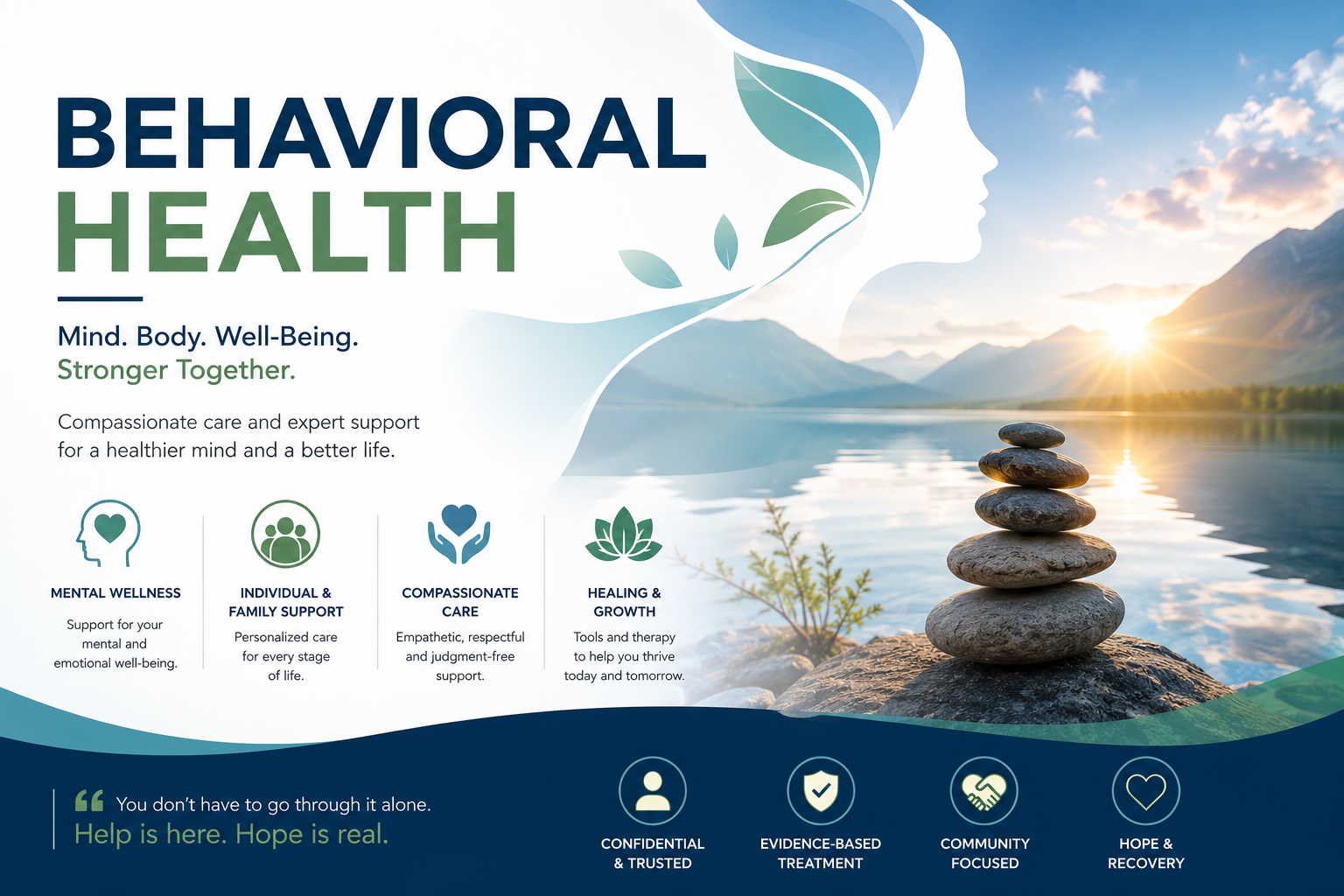
Quick Answer
Behavioral health is a broad term covering how your everyday habits and behaviors — sleep, diet, substance use, and more — affect both your mental and physical wellbeing. It includes mental health conditions like anxiety and depression, but also extends to things like substance use disorders and lifestyle-driven health risks. There’s no single, universally agreed-on definition, even among professionals, which is exactly why the term causes so much confusion.
At a Glance
| Factor | Details |
| Topic | Behavioral health |
| Definition | The connection between everyday behaviors and overall physical, mental, and emotional wellbeing |
| What It Covers | Mental health conditions, substance use disorders, and lifestyle behaviors like diet, sleep, and exercise |
| Key Benefit of Understanding It | Helps you find the right kind of provider or program instead of guessing |
| Common Confusion | Often used interchangeably with “mental health,” though the two aren’t identical |
| Best Use Case | Searching for care, insurance coverage, or workplace programs that address habits and mental wellness together |
You’ve Probably Seen This Term Everywhere Lately
It’s on insurance cards, hospital directories, workplace wellness emails — “behavioral health” shows up constantly, but it’s rarely explained.
Most people assume it’s just another way of saying “mental health.” Sometimes it is. Sometimes it means something noticeably broader.
Here’s what the term is actually trying to capture, and why even the experts who use it daily don’t fully agree on its edges.
What Does “Behavioral Health” Actually Cover?
At its core, behavioral health looks at the relationship between behavior and health — how habits like eating, sleeping, exercising, and substance use shape both your mental and physical condition.
That makes it broader than a single diagnosis. It includes recognized mental health conditions, but it also covers things like chronic overeating, risky alcohol use, or sleep deprivation — behaviors that affect wellbeing whether or not they come with a formal diagnosis.
Why the Term Exists Separately From “Mental Health”
Behavioral health is the newer of the two terms, and one reason it caught on is that it sidesteps some of the stigma historically attached to the word “mental.”
It also reflects how care has evolved: rather than treating the mind and body as separate systems, behavioral health frames them as connected, which matches how most modern treatment programs actually operate.
Where You’ll Run Into the Term
- Hospital and clinic directories listing “behavioral health services” alongside other departments
- Health insurance plans, which often bundle mental health and substance use coverage under this label
- Workplace Employee Assistance Programs (EAPs) offering behavioral health support
- Primary care offices, where behavioral health is increasingly integrated directly into general checkups
The Conditions and Behaviors It Spans
| Category | Examples |
| Diagnosable mental health conditions | Depression, anxiety disorders, bipolar disorder, PTSD |
| Substance use | Alcohol use disorder, prescription misuse, drug dependence |
| Lifestyle behaviors | Chronic overeating, sedentary habits, sleep deprivation |
| Social & relational patterns | Isolation, workplace stress, family conflict |
How a Behavioral Health Visit Actually Works
- An intake conversation covers both your mental state and relevant daily habits, not just symptoms
- A provider looks for patterns connecting behavior to physical or emotional outcomes
- Treatment plans often target the behavior directly, alongside any diagnosed condition
- Progress gets measured in both symptom change and behavior change — not just one or the other
A Concrete Example
Take someone managing both obesity and poor sleep. A purely mental-health-focused visit might stop at screening for depression or anxiety.
A behavioral health approach goes further — looking at what’s driving the overeating or sleep disruption, since research has consistently linked inadequate sleep to higher rates of obesity, diabetes, and cardiovascular disease, on top of its effects on mood.
That wider lens is the actual point of the term: treating the behavior and the health outcome as connected, not separate problems.
Common Misunderstandings About the Term
- “It’s just a rebrand of mental health.” Sometimes used that way, but technically it covers more ground, including substance use and lifestyle behaviors.
- “It only applies to diagnosed conditions.” It also covers undiagnosed but harmful patterns, like chronic stress eating or excessive screen time.
- “It’s a niche specialty.” An estimated 70% of primary care visits involve a behavioral health component in some form, according to industry data — it’s far more mainstream than it sounds.
- “Every provider defines it the same way.” They don’t. Some explicitly include substance use and psychiatric diagnoses; others use it more narrowly for habit-focused care.
Behavioral Health vs. Mental Health: The Comparison Nobody Fully Agrees On
Most articles online present a tidy, confident distinction between these two terms. In reality, professional sources — including pieces published in Psychology Today — openly acknowledge there’s no real consensus. Here’s the most common version of the distinction, with that caveat attached:
| Aspect | Mental Health (common usage) | Behavioral Health (common usage) |
| Primary focus | Psychological and emotional state | Behaviors affecting physical and mental wellbeing |
| Typical scope | Diagnosable conditions like anxiety or depression | Diagnosable conditions plus lifestyle habits and substance use |
| Common setting | Therapy, psychiatry | Integrated care, EAPs, addiction treatment, primary care |
| Level of agreement | Fairly consistent across sources | Genuinely contested — definitions shift by organization |
How to Use This Term to Get the Right Care
- Ask directly what a provider’s “behavioral health” services include — some cover substance use treatment, others don’t.
- Check your insurance card’s terminology today — “behavioral health benefits” often bundles mental health and addiction coverage under one umbrella.
- Mention habits, not just feelings, at your next appointment — sleep, eating, and substance use patterns are fair game even in a standard checkup.
- Look into your employer’s EAP this week — many workplace behavioral health programs are free and underused.
Is Behavioral Health the Same as Psychiatry?
Not exactly. Psychiatry is a medical specialty focused on diagnosing and treating mental illness, often with medication. Behavioral health is the broader umbrella that psychiatric care often falls under, alongside therapy and addiction treatment.
Does Behavioral Health Include Addiction Treatment?
Yes, in most common usage. Substance use disorders are typically grouped under behavioral health alongside mental health conditions, especially in insurance and hospital settings.
Why Do Some Organizations Avoid the Word “Mental” Entirely?
Reducing stigma is a major reason. “Behavioral health” can feel less loaded to some patients, which is part of why it’s become the preferred term in many clinical and insurance settings.
Can Behavioral Health Issues Exist Without a Mental Health Diagnosis?
Yes. A behavior like chronic poor sleep or excessive drinking can affect wellbeing significantly without meeting the criteria for a specific mental health disorder.
How Do I Know If I Need Behavioral Health Support?
If a habit or pattern — sleep, substance use, eating, stress response — is consistently affecting your daily life or physical health, that’s generally a sign it’s worth bringing up with a provider, even without a formal diagnosis in mind.
What Most People Don’t Realize
Most people assume there’s a clean, agreed-on line separating “behavioral health” from “mental health.” There isn’t — even within Psychology Today’s own pages, writers have pointed out there’s no real consensus on where one term ends and the other begins.
That’s not a flaw in the system. It reflects something true about health in general: behavior, mind, and body don’t actually separate as cleanly as our vocabulary suggests.
The Three-Lens Way to Read the Term
Instead of hunting for one perfect definition, it helps to recognize that “behavioral health” gets used through three different lenses, depending on who’s saying it:
- The Clinical Lens — focused on diagnosable conditions, similar to how “mental health” is often used.
- The Habit Lens — focused on everyday behaviors like sleep, diet, and substance use, with or without a diagnosis attached.
- The Systems Lens — how insurance companies and healthcare systems bundle services together for billing and coverage purposes.
Once you know which lens someone’s using, the term stops feeling vague and starts being genuinely useful.
What Should You Do Next?
If you’re trying to find care, start by asking a provider or insurance rep exactly what falls under their “behavioral health” umbrella — don’t assume it matches another organization’s definition.
If you’re noticing a habit affecting your wellbeing, bring it up even without a formal diagnosis in mind — that’s squarely within what behavioral health care is meant to address.
Avoid getting stuck trying to find one “correct” definition online — the term genuinely flexes by context, and chasing a single answer will mostly waste your time.
Suggested Internal Links
Add these once matching pages exist on your site, using descriptive anchor text:
- Link to a mental health conditions overview using anchor text like “common mental health conditions and their symptoms”
- Link to a substance use treatment page using anchor text like “how substance use treatment programs work”
- Link to an insurance/coverage guide using anchor text like “understanding your behavioral health insurance benefits”